



Budget season in New Hampshire always brings debate, but this year, the differences in state revenue estimates are especially hard to overlook. The numbers coming out of Concord set the course for everything from school funding to road repairs, and when those numbers aren’t grounded in agreement, the uncertainty ripples through every town, school district, county, and state agency.
Gov. Kelly Ayotte’s budget for 2026–27 relies on revenue projections that are $513.5 million higher than what the House used. Her plan totals $16.7 billion, while the House passed a $16.2 billion budget based on a more conservative outlook. The Senate’s numbers fall somewhere in between, about $300 million below the governor’s budget. These aren’t just abstract figures — they decide what gets funded, from education and public health to municipal aid and infrastructure.
Gov. Ayotte summed up the challenge: “At the end of the day, the budget that passes, the lady who has to manage all this is me.” On the House side, Finance Committee Chair Ken Weyler (R-Kingston) acknowledged the tough choices involved, noting, “There are things in it I don’t like but I have a responsibility to pass this budget.” To strengthen the House’s negotiating position with the Senate, Weyler and his committee included 29 separate pieces of legislation in the budget’s trailer bill (HB 2), making it clear the House’s proposal is as much about setting the stage for negotiations as it is about outlining a final fiscal plan.
Other New England states have found a better way. Take Maine, for example. There, economists, nonpartisan staff, and executive branch officials sit down together and work out a single, binding revenue estimate. It’s called consensus forecasting, and it’s required by law. The process is transparent, draws on real expertise, and means that everyone — legislators, the governor, state agencies, and local officials — are working from the same set of facts. Maine’s approach has helped avoid last-minute budget clashes and given everyone more certainty when it comes to planning for the year ahead.
When revenue estimates are uncertain and subject to negotiation, the effects unfortunately reach far beyond the Statehouse. Local governments are left not knowing how much state aid to count on. School districts must delay long-term decisions about hiring, programming, and facility maintenance. State and county agencies face questions about funding for health and human services. Even the University System of New Hampshire is forced to plan for deep cuts, with the House budget proposing to reduce its funding by $80 million — including a $50 million cut to the University of New Hampshire alone — compared to the governor’s proposal. When state funding is in flux, these institutions can’t responsibly commit to investments or services, and families across New Hampshire are left worried about everything from college affordability to the future of local services. This kind of uncertainty undermines confidence in government and makes it harder for every part of the state to plan for the future.
Consensus forecasting isn’t complicated, and it isn’t partisan. It’s just a practical way to make sure everyone is reading from the same set of facts. If New Hampshire adopted this approach, we’d have a budget process that’s more predictable, more transparent, and more trustworthy. It’s a step that would make state budgeting more reliable, and a whole lot less stressful, for everyone involved.
•••
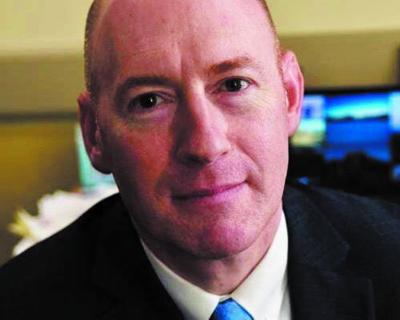
Originally from Laconia, Todd Selig is the longtime town manager in Durham, where he lives with his family.


(0) comments
Welcome to the discussion.
Log In
Keep it Clean. Please avoid obscene, vulgar, lewd, racist or sexually-oriented language.
PLEASE TURN OFF YOUR CAPS LOCK.
Don't Threaten. Threats of harming another person will not be tolerated.
Be Truthful. Don't knowingly lie about anyone or anything.
Be Nice. No racism, sexism or any sort of -ism that is degrading to another person.
Be Proactive. Use the 'Report' link on each comment to let us know of abusive posts.
Share with Us. We'd love to hear eyewitness accounts, the history behind an article.