


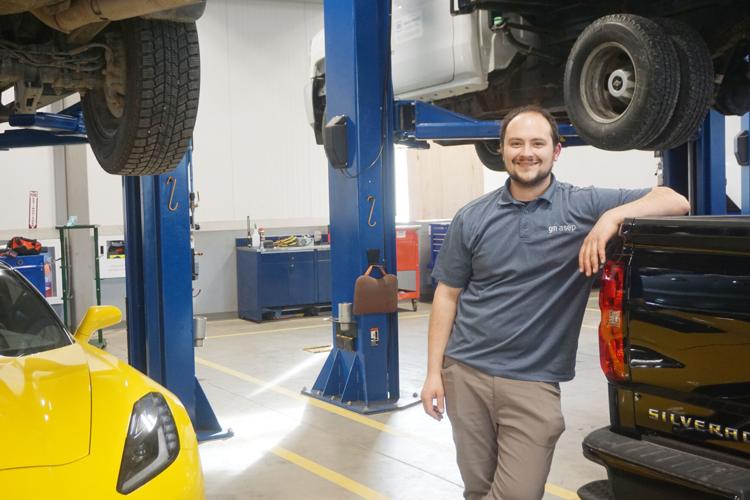
LACONIA — Inside a large garage chock-full of cars, trucks, engines and classrooms at Lakes Region Community College is hidden one of the Lakes Region’s most valuable secrets: the school's auto tech program.
And the New Hampshire Automobile Dealers Association helps talented students get there.
Eight New Hampshire students received a total of $30,000 in scholarship funds from the NHADA at a ceremony Dec. 10, two of whom will attend LRCC — Chase Paquette, from Concord Regional Technical Center, and Griffin Patch, a student at the Richard W. Creteau Regional Technology Center. Both students earned $2,000 scholarships to attend LRCC. Kim Stevenson of LRCC also was recognized as the Post-Secondary Instructor of the Year at the event.
The students will join cohorts in a stringent and fast-paced program seeking to educate the whole student, putting them on a pathway to earn both an associate’s degree and technical certification, all while participating in gainful employment, forming the basis from which a career will eventually blossom.
The work done by the NHADA is significant for the automotive industry. It provides a mechanism for both dealers and independent auto repair businesses to attract and retain students who become workers during the early stages of their careers. For students who may be considering leaving the state in search of opportunity, or who may not consider attending college at all, the scholarship program could make the difference.
At LRCC, the program works a little differently. The total cost is between $18,000 and $22,000, and depends on several factors, like toolkits and tuition assistance.
Those who choose LRCC programs are connected to an employer, and their overall development is essentially a partnership between the student, employer, supporting automotive manufacturers, and the college itself.
Students study for two years, broken into trimesters, working at auto dealerships throughout New England along the way. Most, once they finish their studies and training, are retained as full-time employees by those dealers, who are navigating a nationwide shortage of qualified automotive technicians at present.
At a dealership, students typically work with a professional mentor.
“That ensures that they’re learning the right things,” Jamie Decato, Transportation Technologies chair at LRCC said last week. He’s been teaching at LRCC for 23 years, and is a graduate of the General Motors program.
The NHADA scholarship program “changes the conversation,” Decato said.
“It’s huge, we’ve got a lot of talent that just up and leaves” New Hampshire.
At LRCC, students can enroll in that program or one under Toyota. The school also works with automotive manufacturers for continuing education for automotive technicians, and there’s what’s called a “global” automotive program, which trains technicians across many different makes of vehicle.
“Our program is quite unique,” Decato said.
By the time students finish at LRCC, they’ve nearly completed industry technical training. Typically, they’ll finish their licensing requirements while working as professionals for the dealership.
“They’re right there, they’re knocking on the door,” Decato said. The program essentially squeezes five or six years of training and education into two. “It’s drinking from a fire hose.”
Keeping students in the Granite State is important, too, Decato said, and noted there’s lots of advantages for them to do so. While LRCC is one of several community colleges statewide with partnerships with automotive manufacturers, they aren't vying for the same students.
“Students tend to gravitate to where their interest is,” he said. “We’re all unique enough, we don’t tend to compete with each other this way.”
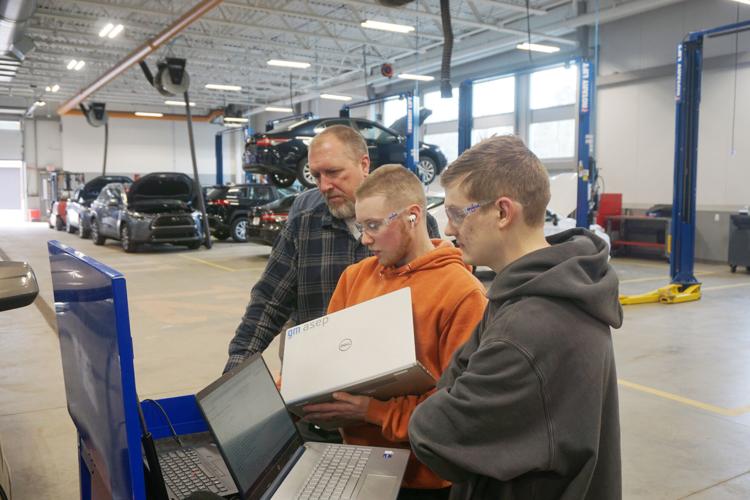
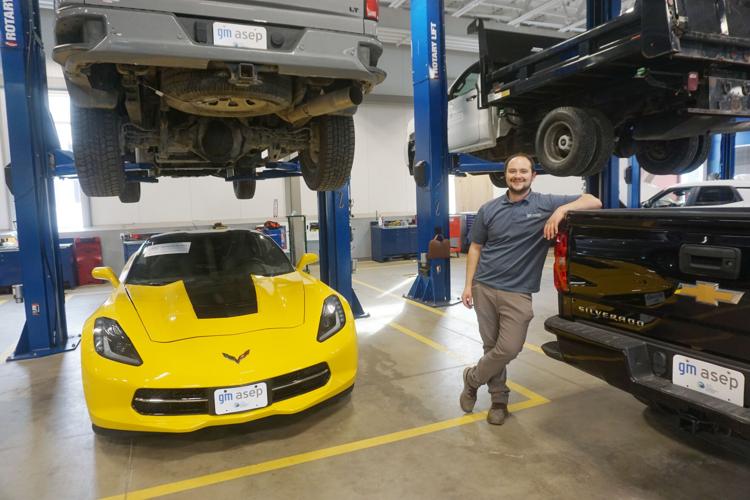
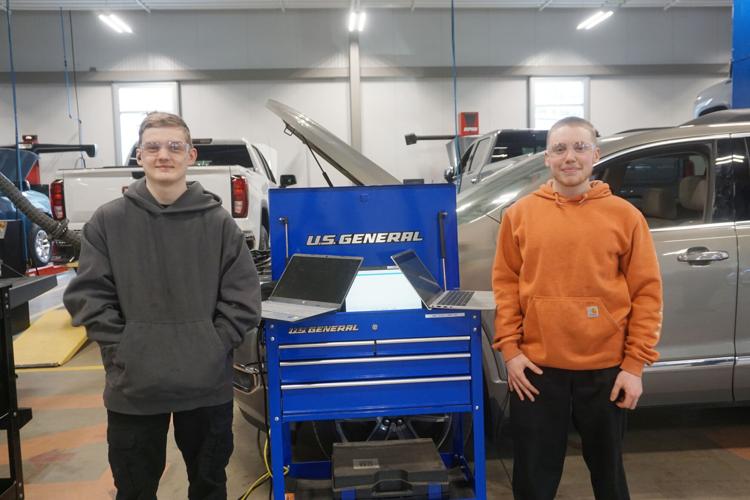
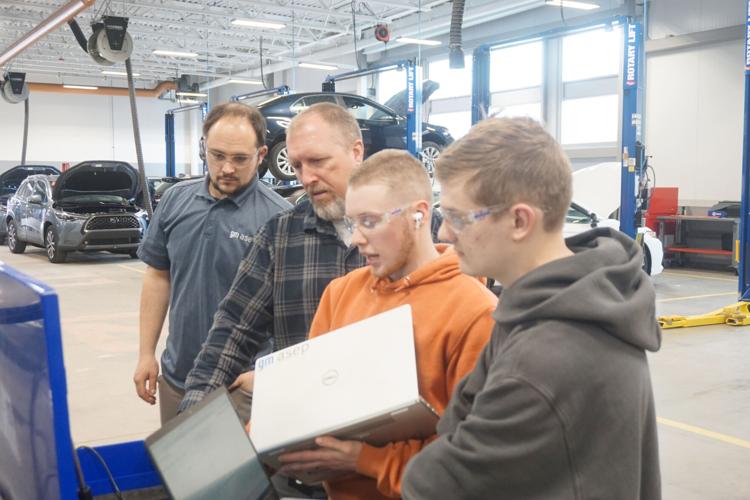
At the LRCC auto tech program, they’ve got classrooms and also a massive "lab," which contains almost 20 bays. There’s numerous vehicles located there, and last week, students were hard at work, learning to use diagnostic tools in real time.
“It really is a testament,” said Forrest Powers, class of 2015 and now an instructor in the General Motors program. He didn’t have formal training in high school before attending LRCC. “We work closely with those dealers.”
Powers said sometimes it's good when students come to the program without prior training — they don’t come in with bad habits. On Jan. 13, Powers was leading students through a lesson on fuel, emissions and systems diagnostics.
Relationships with dealers can assist students in finding upward mobility and expose them to numerous different career paths.
“The opportunities within a dealership are endless,” he said.
“I love it,” Powers said of his job and seeing his students find success down the road. “That’s the reward.”
Brian Garrett and Spencer Jones are two LRCC students in the program, working for dealerships in New Hampshire.
“The GM dealer urged me to do this program,” Jones said. “It’s been great, it’s been awesome. I mostly did it because I wanted to be able to fix my own stuff, originally.”
He’s planning to work full-time after he finishes school.
“It’s been great,” Garrett agreed. “While I’m here, it’s lots of hands-on. I feel excited to go to work every day.”
Garrett looked at a number of colleges before he settled on LRCC. It’s their unique “co-op” program, which places student technicians in the professional settings, that sealed the deal for him. The academic and technical training particularly helped him learn and understand the electrical and computational side of the business.
“That probably would’ve been more difficult if I hadn’t come to school,” he said.
“It’s a great way to get a head start,” Decato said.


(0) comments
Welcome to the discussion.
Log In
Keep it Clean. Please avoid obscene, vulgar, lewd, racist or sexually-oriented language.
PLEASE TURN OFF YOUR CAPS LOCK.
Don't Threaten. Threats of harming another person will not be tolerated.
Be Truthful. Don't knowingly lie about anyone or anything.
Be Nice. No racism, sexism or any sort of -ism that is degrading to another person.
Be Proactive. Use the 'Report' link on each comment to let us know of abusive posts.
Share with Us. We'd love to hear eyewitness accounts, the history behind an article.