


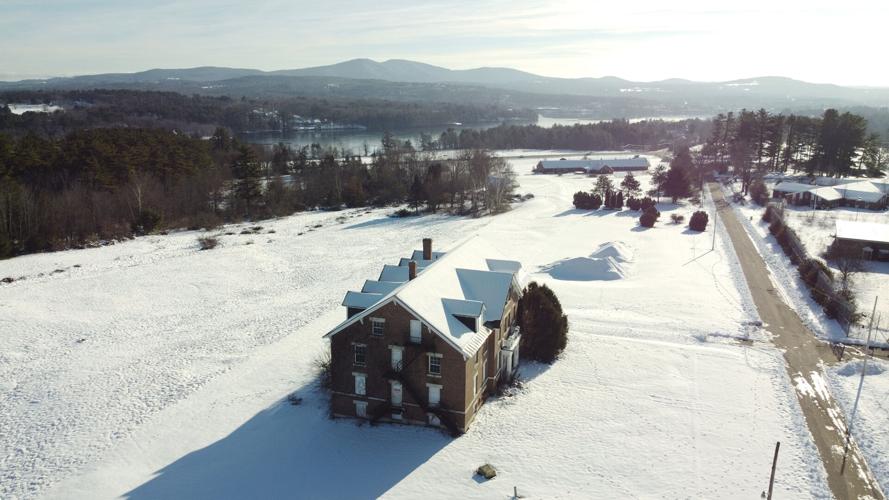
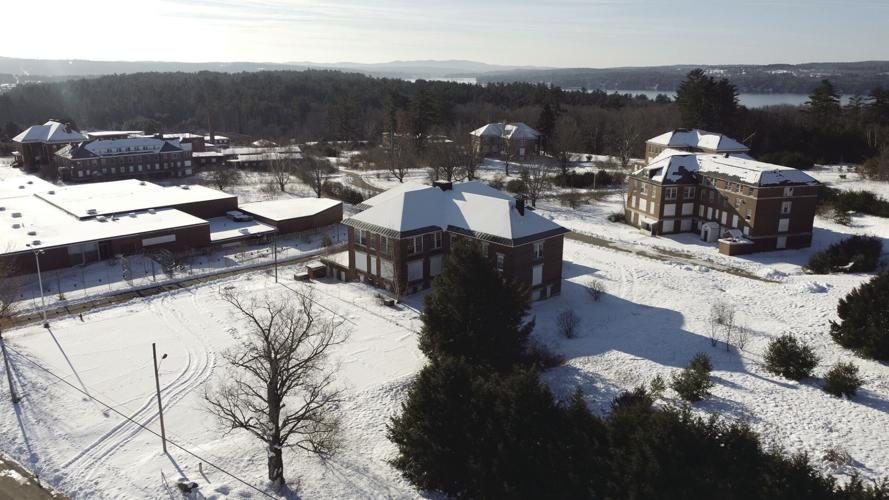
CONCORD — After decades of unsuccessful sale attempts by the state, a revived effort to sell the Laconia State School property came to fruition Wednesday with a 3-2 Executive Council vote to approve a purchase and sale agreement with Legacy at Laconia, LLC.
The sale marks the closing of a lengthy, and increasingly expensive, chapter for the state, and the opening of one laden with both ongoing questions and immense opportunities for the city.
The issue was tabled by the council two weeks ago amid concerns — by both the city and some councilors — that the state had not sufficiently vetted the financials of the proposed buyer.
Since questions about the buyer’s financial qualifications and experience were raised two weeks ago, Mayor Andrew Hosmer and City Manager Kirk Beattie met several times with the development team on the project, according to Hosmer. Those meetings acquainted the city with some of the development team, he said, and confirmed that current city uses of the property would be preserved after the sale of the 220-acre property.
“I’m hopefully optimistic about the project,” Hosmer said. “In some respects, we've cleared up some of those questions, which is a good start. But we've got a lot of work to do over the next 90 days with these buyers.”
Now that the property is passing out of the state’s hands, time, rather than the Department of Administrative Services, becomes the judge of whether or not the Legacy at Laconia team has the wherewithal, financial or otherwise, to execute its proposal.
“What remains to be seen — and we really won't know this thoroughly until the project gets moving along — is [whether] these developers have the financial backing necessary to complete the project,” Hosmer said. “There's always going to be risk there — whoever the developer is.”
The city’s approach, he continued, is working with the buyer to minimize the risk to the city.
Hosmer said he’s considering appointing a committee of city officials to liaise with Legacy at Laconia who “understand the complexity of the project and also understand that the city has expectations we want fulfilled.” He hopes especially to convince developers to prioritize demolition of current buildings, doing what he calls “remediation” of the property and its utilities, and infrastructure updates.
“Cleaning up the property, I think, is really going to be a first big step here,” Hosmer said. “So even if they only complete 10% or 20% — and that’s not what I hope, believe me — at least then we've taken down the buildings that need to be demolished.”
The site was originally built by the state as a residential school for adults and children with developmental disabilities, and later used as a state prison.
The Executive Council was divided over the sufficiency of answers from DAS Commissioner Charlie Arlinghaus, whose department has overseen the sale process, to questions about the state’s financial vetting process for proposed buyers.
Councilors Joe Kenney, whose district includes Laconia, Cinde Warmington and Janet Stevens voted to approve the sale.
Kenney and Warmington noted that conversations with Hosmer gave them confidence that the city’s concerns had been sufficiently eased, making them confident to move forward.
The two weeks since the agreement was first discussed, Warmington said, were “a good breathing period to make sure that some additional people were engaged, brought into the conversation appropriately... I'm very pleased that we took the time.”
“When I looked at this, there was really two mission statements,” Kenney said, both of which he felt had been met. The first was for the state to successfully sell the property. The second, and his priority, he said, was that “we work with the city of Laconia and we make sure that we get them to a place where they feel good about post development.”
Councilors Ted Gatsas and David Wheeler voted against, each expressing that they wanted more time, and more information, to weigh the deal.
“If I have to vote today it's going to be ‘no,’ but not because I'm against the project,” Wheeler said. “But because I think that it needs a little more airing out. ”
Gatsas emphasized that he had not seen enough financial information about the proposed buyer to approve the sale.
“I'm not too sure that we all understand who the development team is,” Gatsas said, and emphasized a lack of understanding where the funding would come from. The property’s sale price is $21.5 million, and developers have named figures as high as $500 million for the project’s price tag.
Kenney, while expressing confidence in the developer, noted that, as with any sizable development, risk plays a perpetual role.
“We don't know what's going to pop out of us, you know, as we travel down the yellow brick road on this particular development project,” Kenney said. “I hope that we get to the Emerald City, and that we're able to say that we did a good thing.”
Hopes — and stakes — are so high because of the promise the project offers Laconia, a city with a 1% vacancy rate, a workforce shortage influenced by low housing supply, local concerns about insufficient investment in accessibly-priced homes and rentals and a need to attract and retain young adults and families.
Legacy at Laconia’s proposal includes as many as 1,900 housing units in addition to a hotel and conference center, health care services, an entertainment venue and public outdoor recreation amenities.
There is a symbolic imperative as well, Hosmer said, to get the development right.
“That property has a long and in so many respects painful history. So many people have very deep and personal connections to the old Laconia State School... so approaching that in a way that is really respectful of the history there is important to people in this city,” Hosmer emphasized.
Kenney, who pledged to remain involved and work with both the city and the developers, celebrated the approval as a turning point for the property’s future.
“We need to get away from treating that property like a sitting museum with very little purpose,” Kenney said. Its history should be both captured and preserved, he noted, but “getting it in the hands of a private entity better equipped than the state to develop it” is a major opportunity, he said. “It’s a sitting acropolis.”


(0) comments
Welcome to the discussion.
Log In
Keep it Clean. Please avoid obscene, vulgar, lewd, racist or sexually-oriented language.
PLEASE TURN OFF YOUR CAPS LOCK.
Don't Threaten. Threats of harming another person will not be tolerated.
Be Truthful. Don't knowingly lie about anyone or anything.
Be Nice. No racism, sexism or any sort of -ism that is degrading to another person.
Be Proactive. Use the 'Report' link on each comment to let us know of abusive posts.
Share with Us. We'd love to hear eyewitness accounts, the history behind an article.