


FRANKLIN — While the old adage “it takes a village” is common, cliches can often be true.
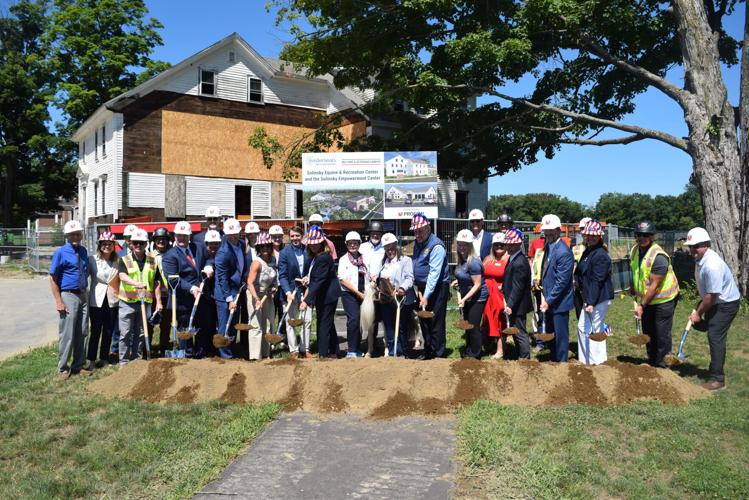
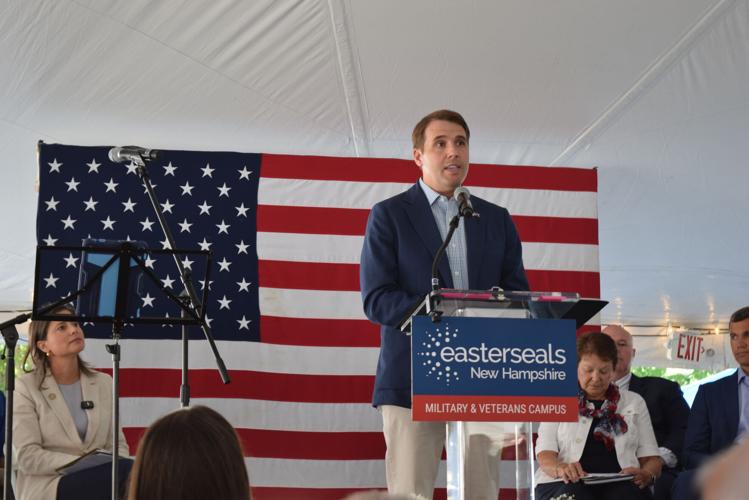
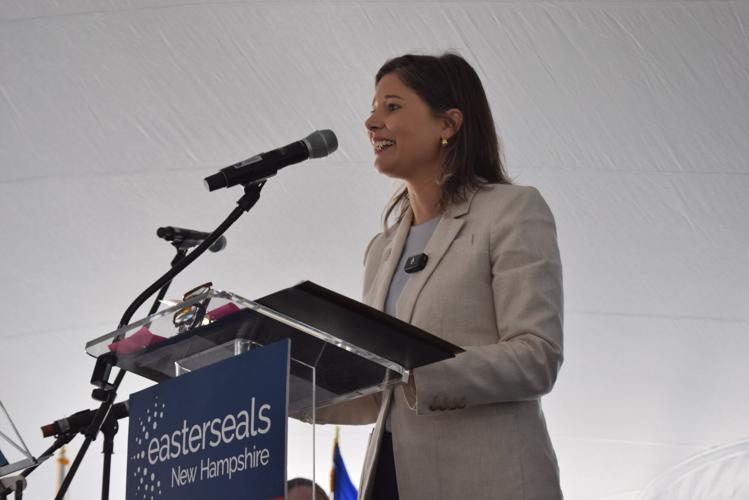
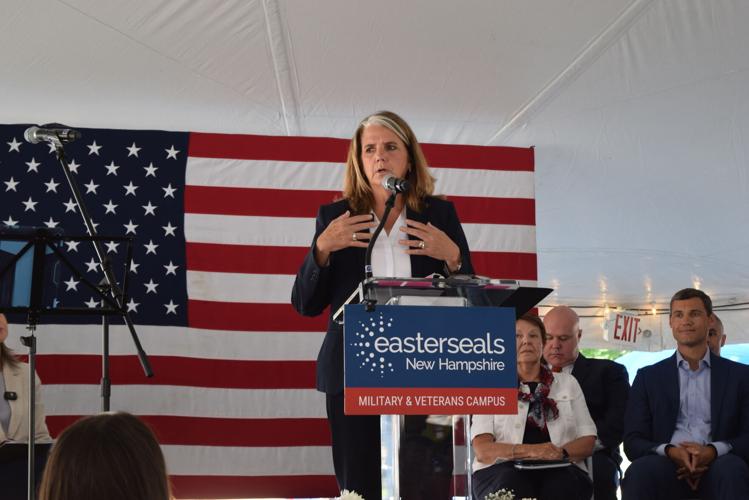
This is the case with the Easterseals Military & Veterans Campus, as elected leaders, veterans, supporters, and stakeholders celebrated the groundbreaking of Phase II of the first-of-its-kind project. The center is focused on giving veterans returning home from service a quality place to live, recover and recreate.
Hundreds of supporters flowed into the Holy Cross Road campus on Tuesday, where they saw the early stages of construction, and heard from those who care about what the second phase will offer.
Last September, Easterseals New Hampshire celebrated the grand opening of the 15-acre campus, featuring 29 affordable housing units for veterans, support services, a hotel, and conference center. The state-of-the-art apartments will house people part of the Veteran Affairs Supportive Housing program, and are based on income. The first phase took about 2.5 years to complete.
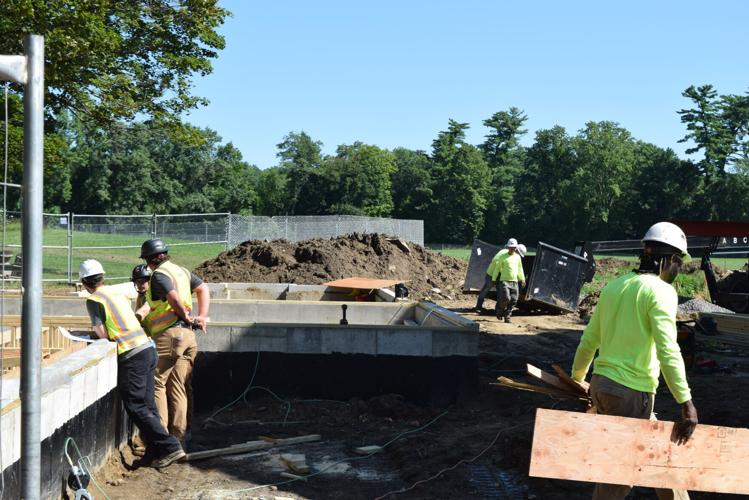
While the groundbreaking for Phase II took place Aug. 4, construction started in June. The newest portions of the campus include Solinsky Empowerment Center and The Solinsky Equine & Recreation Center, located behind the parking area for housing, adjacent to the Werner Mazda Challenge Course.
The challenge course will be running in September, and Phase II is expected to be completed by next summer. The newest additions to the campus are intended to expand recreation access, including equine-assisted services, service dog training space, art and music therapy, care coordination, classrooms, and other wellness initiatives.
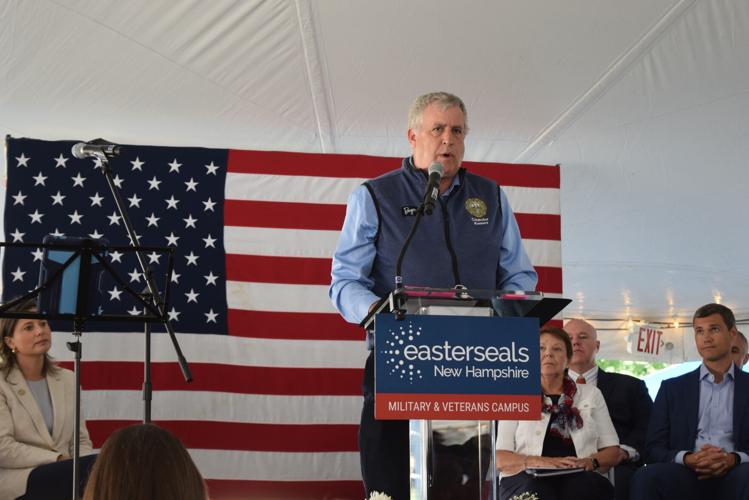
“This is really exciting for the veteran community,” Executive Councilor Joe Kenney (District 1) said before the start of the event. “To have a place to go to receive clinical treatment, a place to recreate, and a place to call home coming off active duty means so much. It’s a proud day.”
The groundbreaking was held near the future site of the Empowerment Center, next to the Bernadine Herron Center, where conferences can be held. More than a dozen supporters and stakeholders praised the unique project.
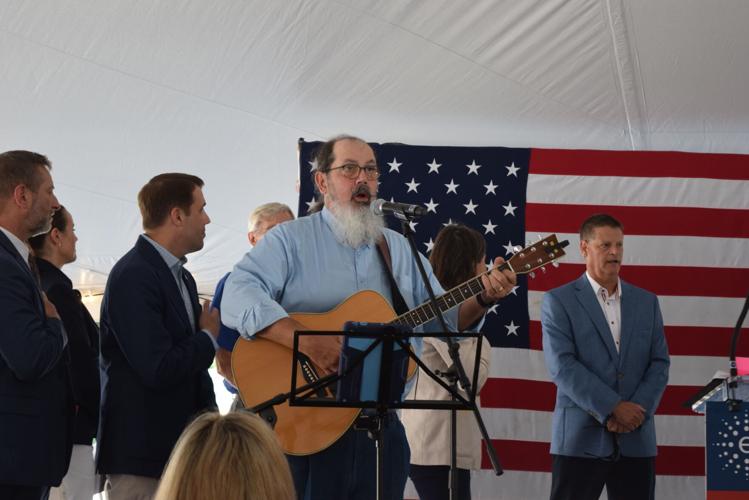
Navy veteran Tony Varga came out with his acoustic guitar to play "The Star-Spangled Banner."
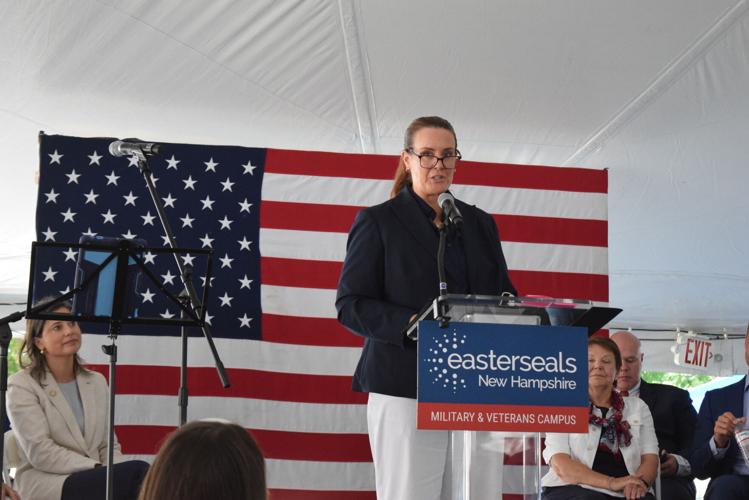
“This is a place where good things happen,” said Bryan Bouchard, chair of the board of directors for Easterseals NH & VT.
He thanked Grace and Ken Solinsky for making Phase II a reality, expanding on the already great work being done on the campus. He also commended Maureen Beauregard, president and chief executive officer of Easterseals NH & VT, who he called a “true visionary leader." He said when she told him her vision — five years ago — it seemed crazy. But it has become a reality.
“Who knows how many phases Maureen is thinking about, but I realize that we have transformed vision to action on this campus,” Bouchard said.
Beauregard recognized Hope Makris, the late owner of The NASWA Resort, in Laconia, who did so much for veterans over the years. In her memory, Beauregard shared the naming of Hope’s Way, to carry her spirit with them as they continue developing the campus.
Beauregard also thanked the Solinskys, saying they lead with kindness, dignity, and respect.
“We are just eternally grateful for you for believing in this project, and wanting to help to do the next right thing for the military, veteran and first responder community,” Beauregard said.
She recognized all the donors, businesses, foundations, and organizations who came together, and continue to do so, with a vision to create the campus.
“Quite frankly, without you, none of this would be possible,” Beauregard said.
Beauregard thanked government leaders who helped get the ball rolling, including Rep. Maggie Goodlander (D-NH), a former Navy intelligence officer. Goodlander said there was no place she would rather be that day.
“This is a beautiful place, where good people are coming together to do good things for one another, and for America,” Goodlander said.
Goodlander said love is the most powerful force the world has ever known, and there is no greater love than what leads a person to put their life on the line, like a veteran. She said to have so many people doing such powerful work together, like at the campus, is as powerful as it gets.
“At 250 years old, what’s happening on this campus is going to keep us forever young,” Goodlander said, of the country. “That is because the promise of this country is really, at the end, pretty simple. It’s people of good faith who believe in one another, who believe in self-government, who believe in solving problems together, coming together in community and in support for one another.”
Rep. Chris Pappas (D-NH) said as a member of the Veterans Affairs Committee, he sees a need to ensure there are investments into things like the campus. He stressed the importance of investing in alternative therapies, and working with other nonprofit organizations.
“There is no one-size-fits-all approach to provide the kind of support that individuals need, whether it’s people struggling with mental health or PTS. We need to make sure that we have all the tools on the table possible to make sure they can live with dignity, and health, and security,” Pappas said.
Kenney, who is a U.S. Marine veteran, said the cause is personal. He said his father was a World War II veteran, who served in Europe and the Middle East, and he didn’t have a campus like this to come back to. His uncle was a Korean War veteran, who suffered his whole life from PTSD, and didn’t have something like this either, and neither did his two older brothers, who served in the Marine Corps and Air Force.
“We have a motto in the Marine Corps: we don’t leave anybody behind,” Kenney said. “And the reason why we do that is because when we’re out in the field, or we’re in a war zone and we’re around hostile conditions, we know that the Marines around us are not going to forget us. They’re going to take us home one way or another.”
Kenney said the Granite State has a proud tradition of supporting veterans. The campus is designed to help veterans who come back from activity duty who have been in serious incidents, who need help and a place to go, to feel at home. He said having support, with all types of therapies, will be a tremendous asset.
“There’s nothing like being a veteran,” Kenney said. “The veterans can understand this. When you come off a deployment from a war zone, you’re not yourself.”
Kenney said, even with all the state does for veterans, people can still fall through the cracks. The campus is a way to ensure that doesn’t happen.
“This campus represents freedom, and all the good work that we do as Americans to take care of our veterans to bring them home,” Kenney said.
Gov. Kelly Ayotte and Sens. Maggie Hassan (D-NH) and Jeanne Shaheen (D-NH) sent statements with representatives from their offices.
Mayor Glenn Morrill said he is proud to have the campus in his city, noting when Phase II is completed in summer 2027, the historic site — which was once a fort and an orphanage — will continue a legacy, to serve veterans.
Also speaking at the event was John Stebbins, chief executive officer of the design firm PROCON, as well as Karen Kersting and Charlotte Troddyn, executive directors of UpReach Therapeutic Equestrian Center, and Operation Delta Dog, respectively.
“The mission of this campus is personal to us,” Stebbins.
Troddyn pointed out 22 veterans each day die by suicide, which is too many. She was happy her organization will send five dogs to live there full-time who, along with the horses from UpReach, will support veterans.
The 988 Suicide and Crisis Lifeline is available for anyone in crisis by calling 988. Visit 988lifeline.org for crisis chat and more resources.
Ana McKenna is chief military and veterans services officer for Easterseals NH & VT, and oversees the campus and Veterans Count program. She was originally named interim director of the campus last December, after four members of the leadership resigned abruptly, citing mismanagement.
McKenna said the campus was built by listening to the needs of veterans and first responders, and not on assumptions. She said the groundbreaking wasn’t just the start of construction, but rather the start of possibilities for thousands of people, who will use the grounds for years to come.
“Healing doesn’t happen in just one appointment, or one program. And it doesn’t happen overnight,” McKenna said. “It happens through relationships, purpose, community, and opportunities to grow.”
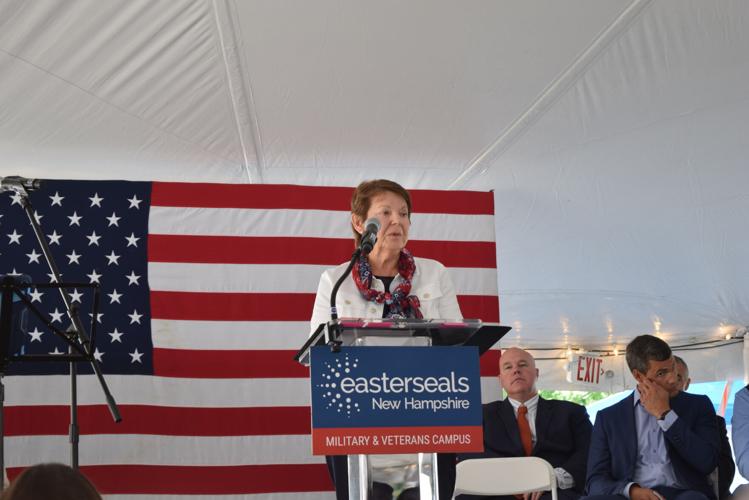
Grace Solinsky — co-founder of Insight Technology, Envision Technology, Spot on GPS Fence, and principal in development of The Village On Technology Hill — is one of the namesakes of major pillars of Phase II. She said she's proud of the creation of a spot where people who have served can heal, reconnect, and build the next chapter of their lives.
Solinsky and her husband, Ken, hope the Equine and Recreation, and Empowerment, centers become places where healing can happen with the help of a horse, a dog, or maybe even a walk with a counselor or friend.
“Protecting our military doesn’t end when their service ends,” Solinsky said. “When a veteran comes home carrying the invisible wounds of war, our responsibility as a community continues. That is why this project means so much to us.”


(0) comments
Welcome to the discussion.
Log In
Keep it Clean. Please avoid obscene, vulgar, lewd, racist or sexually-oriented language.
PLEASE TURN OFF YOUR CAPS LOCK.
Don't Threaten. Threats of harming another person will not be tolerated.
Be Truthful. Don't knowingly lie about anyone or anything.
Be Nice. No racism, sexism or any sort of -ism that is degrading to another person.
Be Proactive. Use the 'Report' link on each comment to let us know of abusive posts.
Share with Us. We'd love to hear eyewitness accounts, the history behind an article.