


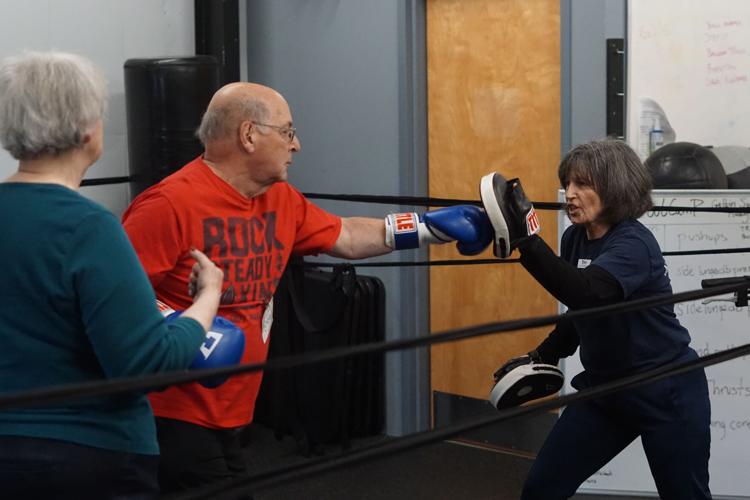
LACONIA — Rock Steady Boxing will hold a "box-a-thon" fundraiser Sunday, May 3, at the Downtown Gym. The event will run from 12:30 to 3:30 p.m.
The boxing group helps further the rehabilitation of individuals afflicted with Parkinson’s, a progressive disease that affects both the function of the brain and body.
The fundraiser will help ensure participants with financial hardship continue to access the program and will also assist organizers in purchasing necessary safety equipment.
“We have scholarships for fighters who can’t afford it, we don’t want finances to be a barrier,” Janine Page, coach and gym owner, said Monday. “Our staff education, and the things that they need, like it does take wrist protectors and gloves, and equipment — things like that, that make the program safer.”
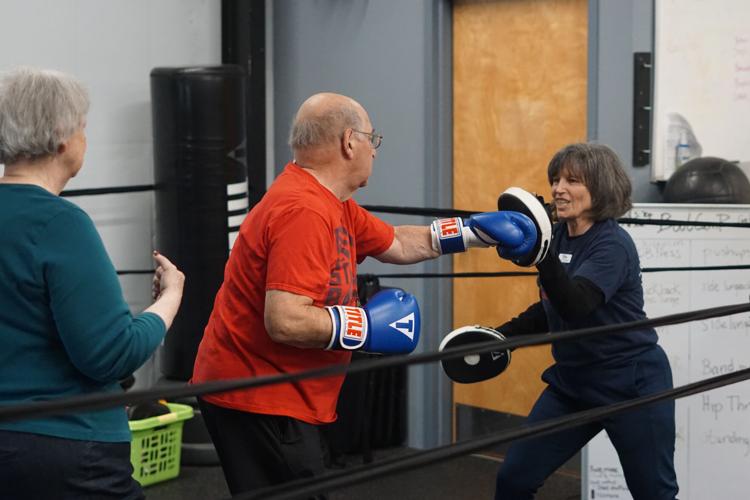
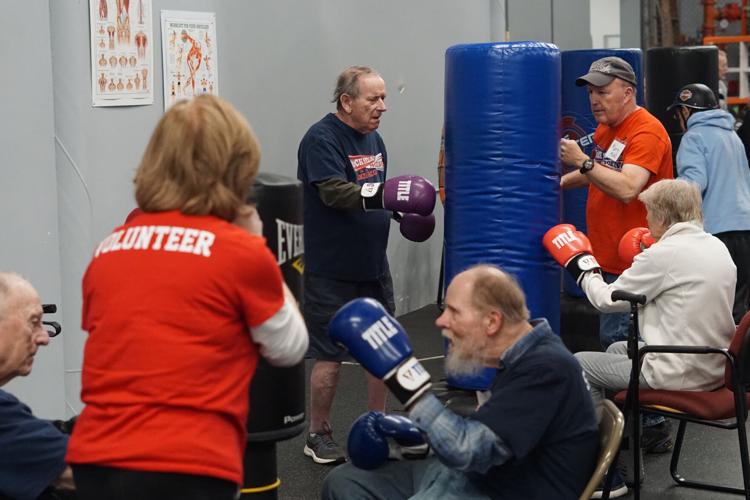
Boxers will work out, without contact, for around three hours during the fundraiser, which is open to the public as an open-house style event.
Rock Steady Boxing is widespread throughout the U.S., but is unique to Laconia within the Granite State. Page and personal trainer Sherry Gardner started the program eight years ago.
“We encourage other people at the gym to stop in and say hello, other family members and the public. Stop in and see what we do,” she said.
Gardner's father died following a brain injury and said working with Parkinson’s patients reminds her of him.
“I’m one of the head coaches and I run the weekly programs," Gardner said.
"We have six coaches on a regular basis and a team of volunteers as well.
“We generally have a main fundraiser every year, a 5k that we do in the fall, and this year we’re adding a second one, this open house. When we started, like seven or eight years ago, we had one and basically it’s just to show what the program [does] and what it’s like. People can experience the boxing side of things.”
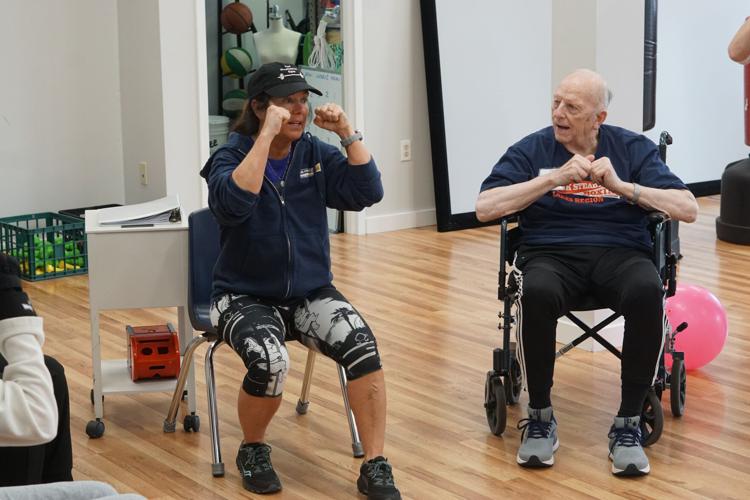
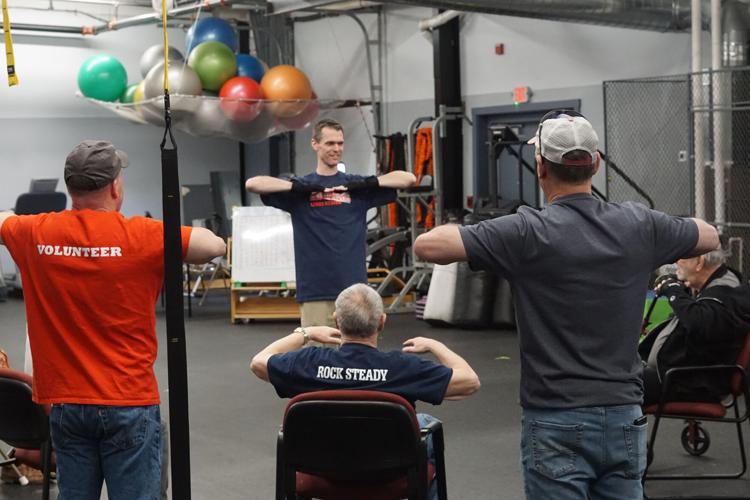
Every class is structured with a warm-up followed by workout stations that address the development of fine motor skills, such as running participants through jigsaw puzzles or picking items up and putting them down again. They’re also instructed on punches and combinations, which stimulates both brain and body.
“Parkinson's is a full-body experience. It's known for the tremor but that’s a small part of the whole overall,” Gardner said. “A certain part of your brain, the substantia nigra, is not getting enough dopamine so you tell your body to do things and it doesn’t receive the signal.”
Gardner said the program was borne out of interest expressed by members of the gym who were diagnosed with Parkinson’s disease.
“We had a couple of people who were members at the gym who had Parkinson's that had heard about [Rock Steady Boxing] and they brought it to [Janine Page],” she said. “It’s headquartered in Indiana, Indianapolis, and we went out there. It was founded by a guy named Scott Newman, he had been involved with amateur boxing and affiliated himself with the female golden gloves champion of Indiana at that time.”
Now there are about 800 affiliates around the world — the only others in New England are located in Vermont and Massachusetts, as far as they know.
“It’s just a really joyous program,” she said.
Following warm-ups, boxing lessons begin.
“Then we break into a boxing thing, and the connection with boxing is that there’s no definitive research, but they have found that boxing is one of the most overall fitness-producing exercises. Hockey is another one,” Gardner said. “We don’t have a huge aerobic component but the boxing quickly brings up your heart rate, it builds upper body strength, and the memorizing of the combinations.”
Gardner said some fighters report symptoms disappearing for a few hours following completion of the routine.
“It’s a progressive disease, so we don’t claim to cure it, but what we have seen, multiple times, is that it delays the progression,” she said. “We do lose people really regularly, and it’s hard.”
“Merry” Mike Mullen, 62, of Laconia, is a volunteer and participant in the program at the Downtown Gym. He said he enjoys boxing and the program is impressive.
“A couple years here, I did maybe a year and a half down in Andover, Mass. I went to the Andover Y for at least a year and a half there, they had a program there,” he said. “It’s a much wider, more in-depth program here than there was in Andover. Andover, they kind of pulled all levels, everybody together. The workout was about an hour twice a week, but it wasn’t really an hour. It’s like herding cats.”
Mullen said Page and Gardner run a tight ship and provide an excellent workout for the right reasons.
“Here, I won’t say it's cracking the whip, but it’s getting everybody focused, 'Let’s go, let’s warm up.' Otherwise everybody will mill around, it’s natural. So I love that about it. All of the coaches, including the owner who’s a coach, they bring in their own style — it’s great because they look at focusing some on core, some on strength, some on stretching, but it all comes together beautifully,” he said. “It’s because it’s more focused and targeted on some of the things that you’ll end up dealing with within Parkinson's at some point in time. Some of the people here, they’ve never really had the tremors and stuff like that in their arms, like I do. They have more difficulty with walking and agility and being steady on their feet. I don’t have that at this point in time, I just have the tremors, and only in the right arm.”
A major piece of Parkinson’s disease that affects quality of life is cognitive disability. Most people recognize the physical side but aren’t clued into the cognitive issues to the same degree, he said.
“There’s a big cognitive aspect to this, too. I can go to a gym, they can go to a gym and just work out. But are you going to get the same overall targeted exercises, stretching and workout that you would get? No, you wouldn’t,” he said. “As you get older and you get my age and you have this affliction, it’s different. It does affect your cognitive function to varying degrees.”
Linda Gray attends workout sessions with her husband Roger and said it’s become a necessary part of his regular treatment.
“There’s good days and bad days. If you saw him on Friday you would not know he’s the same person today. Today he can hardly move. It’s just Parkinson's, it’s how it is. Same meds, regular sleep, diet, you know, everything,” she said. “We insist on coming. It’s beneficial that he keeps coming, he has to keep coming. It’s stimulating the brain, multitasking, and that’s one of the difficulties with Parkinson's.”
There are about 50 participants in the program now, but Gardner and Page are shooting to increase that figure to around 70.
“They have to stick with it, they can’t just do it sporadically,” Gardner said. “We modify everything to what’s happening on a daily basis, some people will have more symptoms one day and fewer symptoms another day. You’ve got to be present to what’s in front of you. We’re always concerned about safety, nobody falls — we keep track.”


(0) comments
Welcome to the discussion.
Log In
Keep it Clean. Please avoid obscene, vulgar, lewd, racist or sexually-oriented language.
PLEASE TURN OFF YOUR CAPS LOCK.
Don't Threaten. Threats of harming another person will not be tolerated.
Be Truthful. Don't knowingly lie about anyone or anything.
Be Nice. No racism, sexism or any sort of -ism that is degrading to another person.
Be Proactive. Use the 'Report' link on each comment to let us know of abusive posts.
Share with Us. We'd love to hear eyewitness accounts, the history behind an article.