



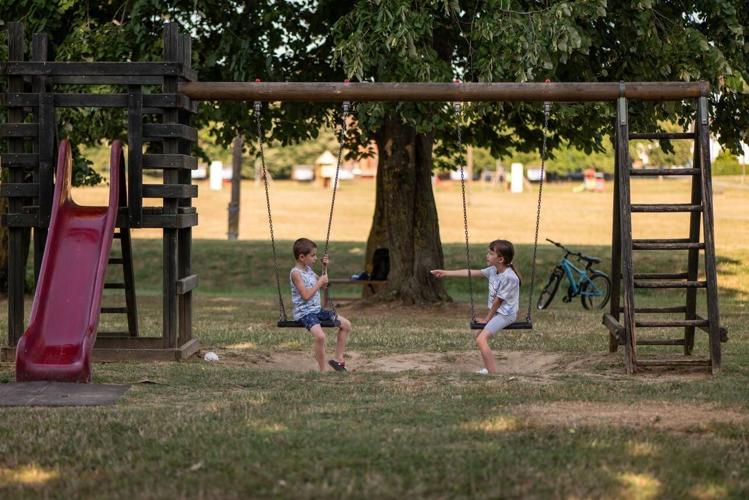

Children enjoy playing on the swings in a play park. (Louise Vennells / University of Exeter via SWNS)
By Stephen Beech
Going to the park to play can improve children’s mental health, according to a new study.
Researchers found that youngsters who visit parks and playgrounds at least once a week may have better mental well-being and social development as they grow up.
A team from the University of Exeter focused on 4- to 11-year-olds, using data from the Children of the 90s study — which follows thousands of youngsters over many years and helps researchers see how changes in their lives relate to their later health.
The findings showed that children who were taken to the park at least once a week from birth to 11 years of age scored, on average, 16.5% better on their mental health assessments compared to those who visited less than once a week over the same period.
The study, published in the Journal of Epidemiology and Community Health, also considered and controlled for confounding factors such as socioeconomic status and family adversity.

(Photo by Vladimir Srajber via Pexels)
Lead researcher Mark Ferguson said: “Our research suggests encouraging children to visit parks and playgrounds at least once a week could be a practical way to support their emotional well-being, social skills and mental health.
“But for this to work fairly, communities need good-quality parks that are safe, accessible and welcoming to families from all backgrounds.”
“Parks give children space to be physically active, which is known to support mental and physical health, as well as helping adventurous and imaginative play to build confidence and independence.
“We believe parks could be more than places to play, but an important resource for children’s healthy development.”


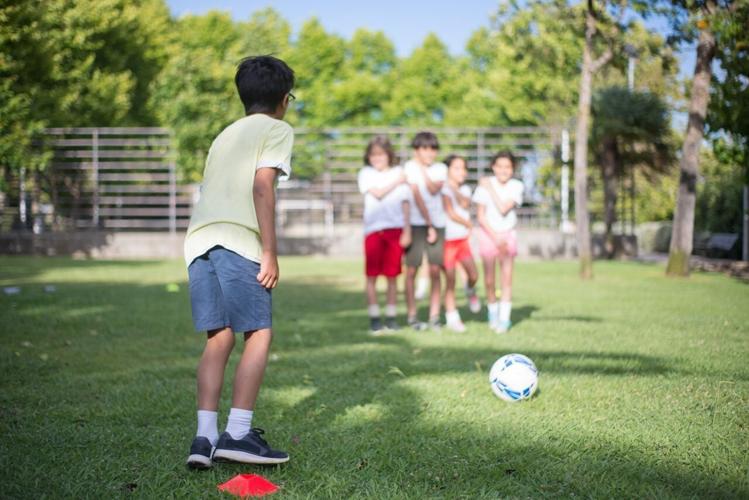
(Photo by Kampus Production via Pexels)
The study included 4,219 participants and focused on social-emotional development — the skills children need to understand and manage their feelings, get along with others, build relationships, behave appropriately, and cope with everyday challenges.
Good social-emotional development is an important foundation for good mental health in childhood and later life.
Researchers found children tended to show better social-emotional development during periods when they went to parks more often.
They also found children who visited parks more frequently overall tended to have better social-emotional development than those who went less often.
The study also looked at whether park visits and social-emotional development varied by family background.

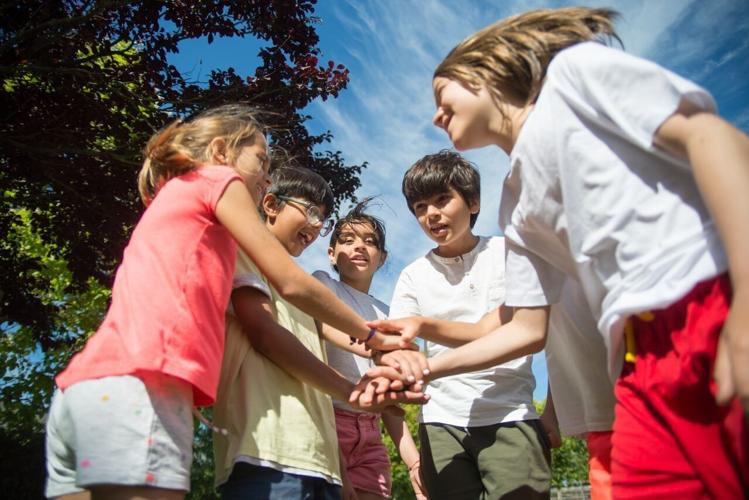
(Photo by Kampus Production via Pexels)
Children from more advantaged families appeared to go to parks more often when they were younger, but as children got older the pattern changed with some children from less advantaged families visiting parks more often.
Ferguson said: “This matters because parks are often free or low-cost spaces.
“The study suggests parks and playgrounds could help reduce inequalities in children’s development — but only if good-quality options are available, safe, welcoming and easy for all families to use.”
He added that more research is needed to understand whether the findings apply to children in other areas with more diverse communities.


(0) comments
Welcome to the discussion.
Log In
Keep it Clean. Please avoid obscene, vulgar, lewd, racist or sexually-oriented language.
PLEASE TURN OFF YOUR CAPS LOCK.
Don't Threaten. Threats of harming another person will not be tolerated.
Be Truthful. Don't knowingly lie about anyone or anything.
Be Nice. No racism, sexism or any sort of -ism that is degrading to another person.
Be Proactive. Use the 'Report' link on each comment to let us know of abusive posts.
Share with Us. We'd love to hear eyewitness accounts, the history behind an article.