





(Photo by ANTONI SHKRABA production via Pexels)
By Stephen Beech
Simple visual tests could provide an early indicator of a precursor to dementia, suggests a new study.
Researchers found people screening positive for mild cognitive impairment (MCI) performed “significantly” worse on visual tasks and consistently took longer to respond than cognitively normal adults.
Reaction times could help detect problems before conventional memory tests, according to the study published in the journal Brain Sciences.
The research by scientists from Anglia Ruskin University (ARU) in Cambridge involved 115 participants, including healthy young adults, cognitively healthy older adults and older adults who screened positive for MCI.

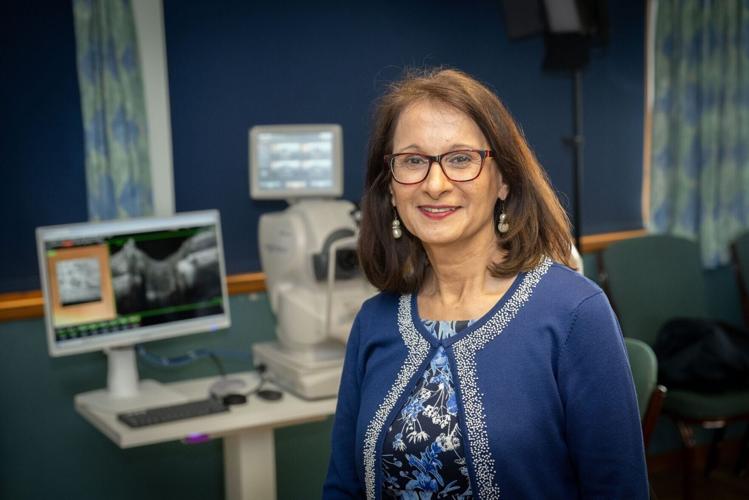
Study lead author Professor Shahina Pardhan, Director of the Vision and Eye Research Institute (VERI) at Anglia Ruskin University (ARU). (Phil Mynott via SWNS)
Researchers assessed participants using short-term memory tasks that each had a strong visual element.
The tasks were designed to test participants’ ability to remember and process information while ignoring distracting or conflicting cues.
One of the tasks incorporated a variation of the classic “Stroop test” — in which participants were shown color words displayed in either matching or conflicting ink colors, such as the word “RED” printed in blue ink.
Another task required the participants to remember arrows whose direction and movement either matched or conflicted with one another.


Participants who screened positive for MCI recorded lower memory scores overall and took 27% longer to respond than healthy older adults.
When they were presented with conflicting visual information, their reaction times also increased, becoming 42% longer than those of cognitively healthy older adults.
The research team says their findings indicate that reaction-time measurements may reveal “subtle” changes in brain function that may not be picked up by traditional assessments which are solely focused on whether a given answer is correct or incorrect.
There are currently several different tasks used in the U.K. whereby patients are tested on their mental abilities to assess their cognition.

(Photo by Hanafi Mellek via Pexels)
These include the General Practitioner Assessment of Cognition, which is commonly used by family doctors.
Study lead author Shahina Pardhan said: “Our study shows that reaction times can provide valuable information about cognitive function that may be missed by conventional memory testing.
“People who screened positive for mild cognitive impairment not only performed less accurately overall but often needed significantly longer to process information and respond, particularly when faced with conflicting visual cues.”
Pardhan, director of the Vision and Eye Research Institute (VERI) at ARU, added: “These findings suggest that measuring reaction times alongside memory performance could help clinicians detect subtle cognitive changes at an earlier stage.
“As populations continue to age and dementia becomes an increasing public health challenge, there is a growing need for sensitive, accessible tools that can identify people at greater risk before symptoms become more severe.”


(0) comments
Welcome to the discussion.
Log In
Keep it Clean. Please avoid obscene, vulgar, lewd, racist or sexually-oriented language.
PLEASE TURN OFF YOUR CAPS LOCK.
Don't Threaten. Threats of harming another person will not be tolerated.
Be Truthful. Don't knowingly lie about anyone or anything.
Be Nice. No racism, sexism or any sort of -ism that is degrading to another person.
Be Proactive. Use the 'Report' link on each comment to let us know of abusive posts.
Share with Us. We'd love to hear eyewitness accounts, the history behind an article.