


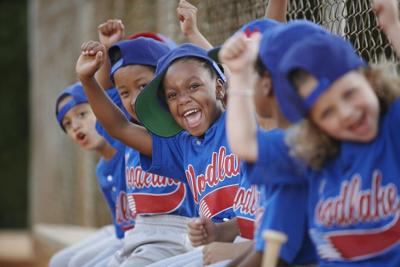
At a recent T-ball game, I was talking with another father who mentioned that his son had never played before. As we watched our children falling over trying to scoop up a ground ball, we laughed about how they were still figuring everything out. There was something refreshing about seeing kids learn a game without worrying about how well they were playing.
That moment stayed with me. I’ve spent years as an athletic trainer in collegiate and professional sports, helping athletes stay healthy, handle the demands of competition and perform at their best. Today, I’m a clinical associate professor of kinesiology and chief health and performance adviser for an NCAA Division I athletics program. Given my work, you might expect me to take an active role in developing my own children’s athletic abilities, especially in a youth sports culture where early specialization and greater commitment are often seen as advantages.
And I understand the appeal. Like any parent, I want my children to have opportunities, and it’s easy to wonder whether another practice or lesson might help them get ahead. But with twins who are nearly 6, I’m more interested in whether they enjoy sports than how good they become at them.
As they get older, particularly if they want to pursue sports seriously, my role as a parent will change. Right now, I can step back and let them explore. But as training and competition become more demanding, I’ll want to become more involved in understanding and questioning those demands. Research on training, recovery and athletic development can help parents navigate what’s appropriate as their children’s sports experiences intensify.
Knowing when to step back
When I’m watching my children play, I’d rather be their dad than their performance coach. When they ask to practice hitting or throwing, I’m happy to help. They usually decide when we’re done. Twenty minutes? Great. Five minutes? That’s fine too.
Practice matters, but giving children some control over when and how they practice can help keep it from becoming another obligation.
Research involving more than 9,000 young athletes found that children tend to be more motivated to participate in sports when parents support their ability to make decisions about their participation.
As children get older, their goals may change. Some will want to compete at higher levels or focus on a particular sport. Those ambitions deserve support, but giving children a voice doesn’t mean parents should step away from important decisions. As commitments grow, parents may need to ask more questions about training schedules, recovery time and the expectations placed on their children.
More isn’t always better
I’ve heard parents describe traveling hours for youth sports tournaments, only to discover that many of the teams competing came from the same communities they had traveled from. One parent recalled driving to Houston for a tournament where six of the eight teams were from the Dallas-Fort Worth area.
I understand how families end up in these situations. An extra practice, private lessons or joining a more competitive team can each seem reasonable. Over time, those commitments become expectations, and saying no isn’t always easy when your child is part of a team.
But more training doesn’t automatically produce better athletes. My experience in sports medicine and performance has taught me that improvement depends on how athletes respond to training, not simply how much they do. Training places demands on the body, and athletes need time to adapt.
The American Academy of Pediatrics cautions that excessive training and early specialization are associated with increased overuse injury risk and may contribute to burnout. Risk depends on training volume, recovery and individual development, particularly during adolescence.


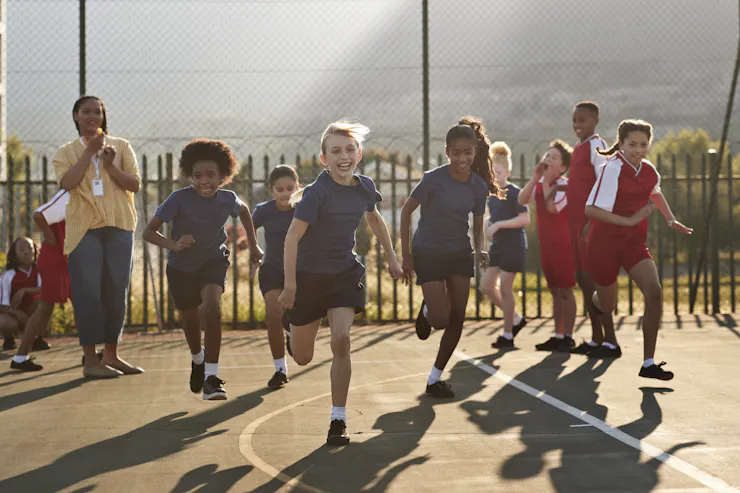
As training demands increase, parents should pay attention to how their children are responding, not just whether they’re experiencing pain. Persistent fatigue, declining performance, changes in sleep or a loss of enthusiasm may suggest that recovery isn’t keeping pace with training. Even an athlete who loves their sport can reach a point where the demands become too much. These are reasons for a parent to discuss the workload with their child and coaches, while persistent or worsening pain warrants medical evaluation.
Athletic development also benefits from variety. Running, climbing, jumping and exploring different activities can help develop coordination and a range of movement skills. The International Olympic Committee recommends varied physical activity and developmentally appropriate training, including for children who may eventually specialize.
Just as important is whether young athletes want to keep playing. Children who enjoy sports are more likely to want to continue participating, research shows. When young soccer players were asked what made sports fun, they identified working hard, improving and spending time with teammates. Even the best training program won’t accomplish much if an athlete no longer wants to participate.
Leaving the game at the field
In collegiate and professional sports, reviewing performance is routine. After competition, staff identify what worked, what didn’t and what needs attention. But children don’t need a performance review every time they climb into the car.
I let my children start conversations about their games. If they want to talk about a missed ball, something funny or something that upset them, I’ll listen. If they want to talk about something else, that’s fine too.
Researchers who recorded parent-child car rides around sporting events found that much of the time passed in silence and sports came up relatively infrequently. They also observed occasions when parents interrupted or provided feedback before children could respond. The findings don’t establish one right way to handle the drive home, but they offer parents a reason to consider whether their children want feedback in the first place.
No parent knows whether their child will become a competitive athlete, play recreationally or eventually find interests outside organized sports. I’m comfortable leaving that future open for my children. As a father, I’m far more interested in whether my kids will want to play again next week than how well they played today.
This article is republished from The Conversation, a nonprofit, independent news organization bringing you facts and trustworthy analysis to help you make sense of our complex world. It was written by: Adam Annaccone, University of Texas at Arlington
Read more:
- Children experience more injuries, stress and even burnout when they specialize in one sport
- High school sports are losing athletes to private clubs, but schools can keep them by focusing on character development
- Strength training early in life can set up kids and adolescents for a lifetime of health and well‑being
Adam Annaccone does not work for, consult, own shares in or receive funding from any company or organization that would benefit from this article, and has disclosed no relevant affiliations beyond their academic appointment.


(0) comments
Welcome to the discussion.
Log In
Keep it Clean. Please avoid obscene, vulgar, lewd, racist or sexually-oriented language.
PLEASE TURN OFF YOUR CAPS LOCK.
Don't Threaten. Threats of harming another person will not be tolerated.
Be Truthful. Don't knowingly lie about anyone or anything.
Be Nice. No racism, sexism or any sort of -ism that is degrading to another person.
Be Proactive. Use the 'Report' link on each comment to let us know of abusive posts.
Share with Us. We'd love to hear eyewitness accounts, the history behind an article.