


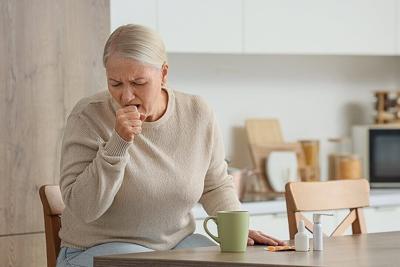

Bronchitis affects the airways, while pneumonia infects the lung tissue itself and is usually more serious. Knowing the difference matters as cold and flu season gets going and World Pneumonia Day arrives on Nov. 12, 2026. Doctronic shares how to distinguish between the two.
Both are types of chest infection. They often start after a cold or the flu, and both cause a cough, so they are easy to mix up. The side-by-side table and warning signs below can help sort out which is more likely and when to get care.
Pneumonia caused 41,627 deaths in the U.S. in 2024, according to the CDC's National Center for Health Statistics. The CDC notes that pneumonia risk rises in the fall and winter.
Key takeaways
- Bronchitis inflames the airways and causes a cough, while pneumonia brings a higher fever, chills, fast or hard breathing and chest pain when breathing or coughing. Older adults may have milder symptoms or a lower-than-normal temperature.
- Pneumonia caused 41,627 U.S. deaths in 2024.
- A chest cold usually lasts less than three weeks, and antibiotics do not help it.
- For pneumonia, treatment depends on the germ: antibiotics for bacterial pneumonia, sometimes antivirals, antifungals for fungal pneumonia; some people feel better within a week while others take a month or more.
- Walking pneumonia is an informal name for milder pneumonia commonly caused by Mycoplasma pneumoniae.
- The CDC recommends pneumococcal vaccines for all adults 50 and older, children under 5 and younger adults with certain conditions. An annual flu shot also lowers pneumonia risk by preventing the flu.
What Is Bronchitis?
Bronchitis is inflammation of the bronchial tubes, which carry air to and from the lungs. It comes in two main types:
- Acute bronchitis: Often called a chest cold, this type usually develops from a cold or other respiratory infection. It typically gets better on its own in less than three weeks.
- Chronic bronchitis: A long-lasting cough with mucus. It is one of the main forms of chronic obstructive pulmonary disease (COPD) and is most often linked to smoking.
A chest cold causes a cough with or without mucus, tiredness, congestion, sore throat and mild body aches. Some people also wheeze or feel tightness in the chest. Fever is more typical of pneumonia.
Most acute bronchitis is caused by viruses, including those that cause the common cold. Bacteria cause it less often. The chronic form comes from long-term exposure to irritants: smoking, secondhand smoke, dust, pollution and chemical fumes.
What Is Pneumonia?
Pneumonia is an infection that inflames the air sacs in one or both lungs, which may fill with fluid or pus. Cases range from mild to life-threatening, and it is most serious for infants, older adults and people with weakened immune systems. Most people catch it in the community. It can also start during a hospital stay, or after food, liquid or vomit is inhaled into the lungs (aspiration pneumonia).
Common symptoms include:
- A cough that may bring up green, yellow, or bloody mucus
- Fever, sweating and chills
- Fast or hard breathing, or shortness of breath
- Chest pain when breathing or coughing
- Tiredness and confusion in older adults
In older adults, symptoms can be milder, and body temperature can be lower than normal instead of higher.
Viruses, bacteria and, less often, fungi cause pneumonia. The CDC lists influenza, RSV, COVID-19, rhinovirus, human metapneumovirus, pneumococcus (Streptococcus pneumoniae) and Mycoplasma pneumoniae as common causes. Bacterial pneumonia can follow a viral infection such as the flu. Read more on how bacterial pneumonia can follow the flu.
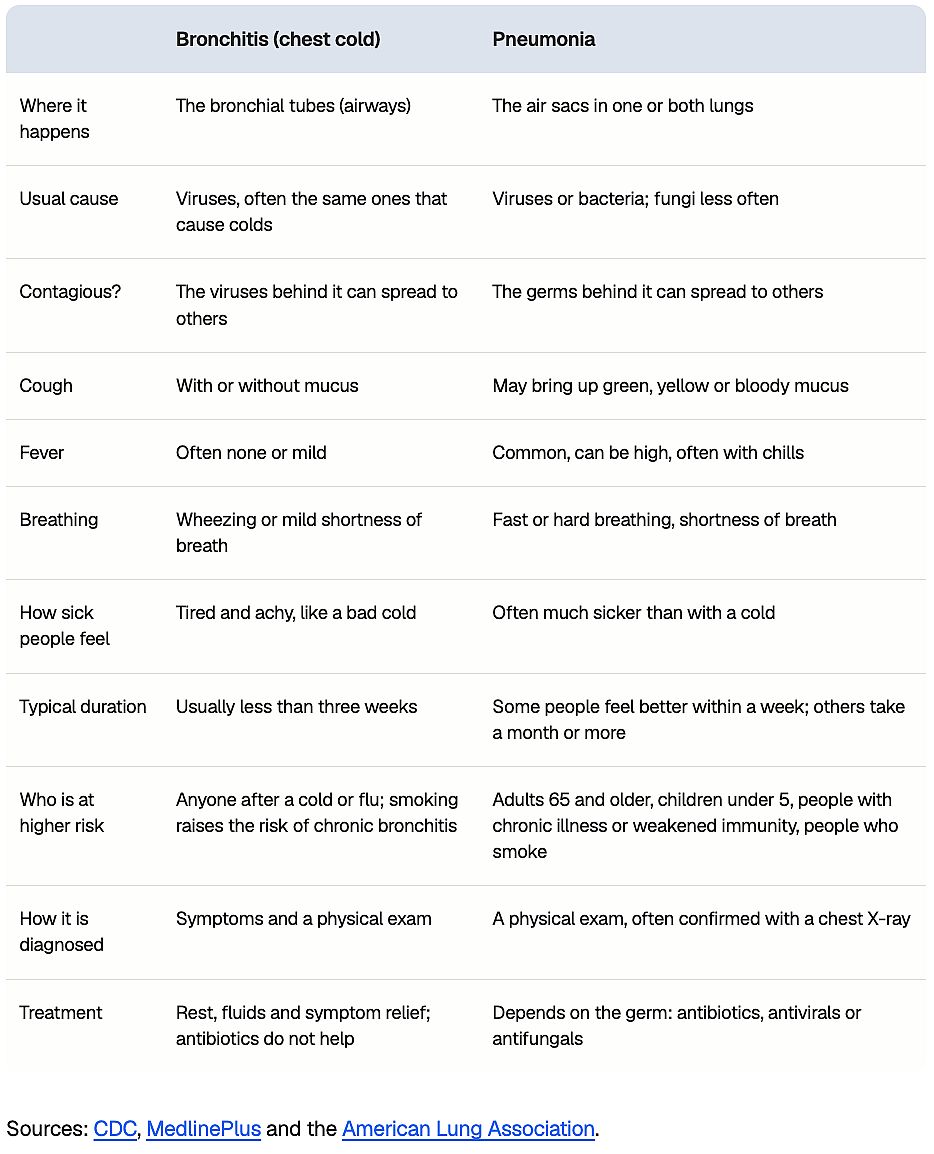
Bronchitis vs. Pneumonia: Side-by-Side Comparison
The two conditions differ in where they happen, how sick people feel and how they are treated.
Signs That Point to Pneumonia
These signs lean toward pneumonia rather than bronchitis:
- A high fever, or a fever that goes away and comes back
- Fast or labored breathing
- Sharp chest pain when breathing
- Feeling much sicker than with a cold
- New confusion in an older adult
The American Lung Association notes that viral pneumonia symptoms usually develop over several days, while bacterial pneumonia can come on gradually or suddenly. Only a doctor can confirm pneumonia, often with a chest X-ray.


How Each Is Treated
Bronchitis
A chest cold usually gets better on its own. Rest, fluids and avoiding smoke and other irritants help. Antibiotics do not help a chest cold. Some people are given an inhaler (bronchodilator) to ease wheezing.
Pasteurized honey can ease a cough in people at least 1 year old. Cough and cold medicines are not recommended for children under 6.
Pneumonia
The treatment matches the germ. Bacterial pneumonia is treated with antibiotics, viral pneumonia sometimes with antivirals, and fungal pneumonia with antifungals. Fluids and, for some people, oxygen therapy are part of care.
In older adults and people with weakened immune systems, pneumonia can lead to serious complications such as sepsis or respiratory failure.
Who Is at Higher Risk for Pneumonia?
The CDC lists these groups as more likely to get pneumonia:
- Adults 65 and older
- Children younger than 5
- People with chronic heart, lung or liver disease, or diabetes
- People with weakened immune systems
- People who smoke or drink heavily
Worldwide, pneumonia kills more children under 5 than any other infectious disease, according to the World Health Organization.
When to See a Doctor, and When to Call 911
The CDC advises seeing a doctor for a chest cold with any of these:
- A fever that lasts more than 5 days, or a temperature of 104 degrees F or higher
- Coughing up bloody mucus
- Trouble breathing
- Symptoms that last more than 3 weeks
- Repeated bouts of bronchitis
- A temperature of 100.4 degrees F or higher in a baby younger than 3 months
The American Lung Association advises getting care promptly for pneumonia symptoms in adults 65 and older, children 2 and younger and people with a chronic illness.
A cough that isn't improving can be checked by a doctor. Call 911 for severe trouble breathing, bluish lips or fingertips, severe or worsening chest pain, or new confusion or extreme drowsiness.
How to Lower Your Risk This Season
Vaccines lower the risk of pneumonia. CDC recommends pneumococcal vaccination for all adults 50 and older, adults 19 to 49 with certain risk conditions and all children younger than 5. Even so, only 25.8% of U.S. adults reported ever receiving a pneumococcal vaccine in 2025, according to the CDC's National Center for Health Statistics.
An annual flu shot lowers the risk of the flu, which can lead to pneumonia, including bacterial pneumonia that follows it.
Not smoking and avoiding secondhand smoke protect the lungs, because smoking damages lung tissue and weakens the body's ability to fight infection. A balanced diet and regular physical activity support overall health.
Washing hands often with soap and water and covering coughs and sneezes help keep germs from spreading.
The Bottom Line
Acute bronchitis (a chest cold) inflames the airways and usually clears on its own within three weeks, while pneumonia infects the lung tissue, is usually more serious and needs treatment matched to its cause. A high or returning fever, fast breathing or chest pain points toward pneumonia, and anyone whose breathing becomes difficult should seek care quickly.
This story was produced by Doctronic and reviewed and distributed by Stacker.


(0) comments
Welcome to the discussion.
Log In
Keep it Clean. Please avoid obscene, vulgar, lewd, racist or sexually-oriented language.
PLEASE TURN OFF YOUR CAPS LOCK.
Don't Threaten. Threats of harming another person will not be tolerated.
Be Truthful. Don't knowingly lie about anyone or anything.
Be Nice. No racism, sexism or any sort of -ism that is degrading to another person.
Be Proactive. Use the 'Report' link on each comment to let us know of abusive posts.
Share with Us. We'd love to hear eyewitness accounts, the history behind an article.