



If you frequently recreate on Lake Winnipesaukee, at some point you’ve pulled some mysterious slimy plant off of your boat and probably put it back in the water not thinking much about it (or if you’re a little mischievous like me, threw it at an unsuspecting friend for a laugh).
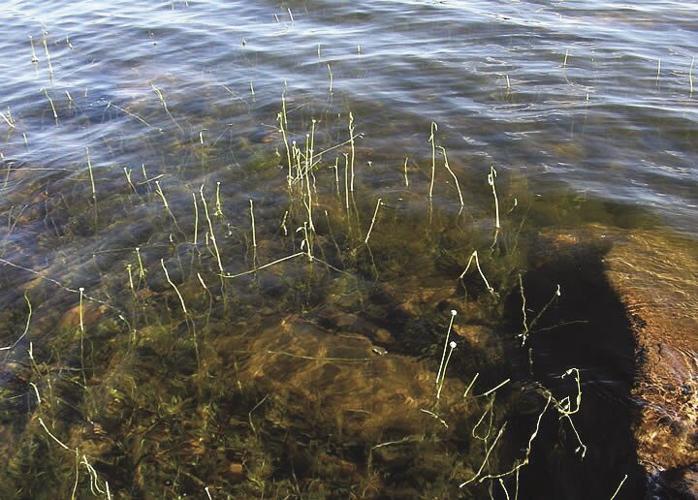
Lake Winnipesaukee is home to many aquatic plant species that can be found on and below the water’s surface. These emergent and submergent species are sparsely located around the lake with the greatest concentration of aquatics being found in the northernmost portion of Moultonborough Bay. Emergent vegetation found in Winnipesaukee includes yellow and white water lily, pickerelweed, and water shield; submergents include pondweed, bladderwort, quillwort, and pipewort. These species are all native and an important part of the lake’s ecosystem. However, Lake Winnipesaukee is also home to invasive species that threaten the lake's health.
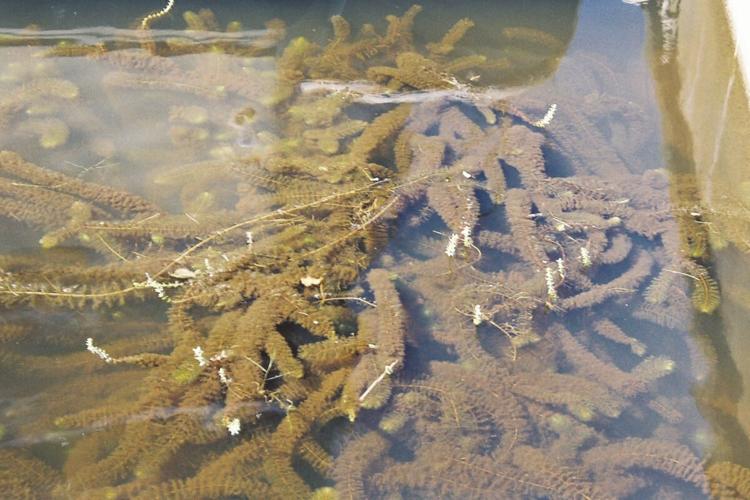
Invasive species are organisms that thrive in ecosystems that they did not naturally develop in and can cause harm to the environment, people and the economy of the region from costly removal efforts to lowering property values. Large growths of invasive species in water bodies can make recreating in them dangerous. Lake Winnipesaukee currently has one confirmed exotic species: variable milfoil. Variable milfoil was discovered in Winnipesaukee in 1965 and was the first instance of this species invading New Hampshire water bodies. The plant is native to the United States but not native to New Hampshire. Variable milfoil is a relatively harmless looking plant with its resemblance to a green squirrel tail and sometimes has a small, reddish flower. Milfoil can grow up to 15 feet long, creating dense mats that suffocate other native species and deplete oxygen levels in the water while decaying, which harms fish and other aquatic animals. These dense mats also make swimming and boating difficult, in addition to becoming a breeding ground for mosquitoes further limiting the enjoyment of the lake.
Out of all the northeastern states, New Hampshire and Maine have been hit the hardest with variable milfoil infestations. Variable milfoil has been found in 90 water bodies between these two states to date. As mentioned earlier, variable milfoil is native to the United States but not native to New Hampshire and the northeast. This species is native to the southern states and most likely “hitchhiked” its way up here on the bottoms of boats and was introduced into our water bodies when these boats were launched. After launch, the pieces of milfoil were most likely fragmented by boat propellers and dispersed around the lake, quickly taking root in the bottom lake sediment. It’s easy for milfoil to spread through fragmentation but loose seeds are also able to grow into large plants in a relatively short period of time.
How do we combat variable milfoil infestation? Unfortunately, there are not many cost effective or environmentally friendly resources available to rid water bodies of variable milfoil. Most of the communities around Winnipesaukee have established Milfoil Control Committees, with annual budgets from the towns to treat milfoil chemically, through suction harvesting, and manually pulling out the plant from the lakebed. These programs have been effective in the long run in managing the milfoil, but are expensive. Additionally, if harvesting is not done properly, milfoil fragments can break off and spread to another area of the lake, creating another outbreak.
In general, the pulling of any plant from the lake is not recommended. Aquatic plants are an important part of the lake ecosystem. Native plants have many benefits including sediment stabilization, water oxygenation and habitat for fish and invertebrates. However, property owners are allowed to remove plants in limited areas for swimming or docking access. But remember, with the removal of any plant growth may cause unintended negative consequences.
The best course of action to fight milfoil infestations is to stop the initial spread of variable milfoil, prevent further infestations in already impacted water bodies and prevent the introduction of new invasive species by practicing “clean, drain, and dry”. Together, we can protect Lake Winnipesaukee by simply cleaning, draining and drying our boats, kayaks, canoes, and checking our trailers after each use to stop those little green hitchhikers.
•••
Jacquelyn Bellefontaine is the conservation outreach manager for the Lake Winnipesaukee Association. She manages communications and outreach initiatives. Jackie can be reached at jbellefontaine@winnipesaukee.org.
The Lake Winnipesaukee Association is a nonprofit dedicated to protecting the water quality and natural resources of the lake and its watershed. To learn more, visit winnipesaukee.org.


(0) comments
Welcome to the discussion.
Log In
Keep it Clean. Please avoid obscene, vulgar, lewd, racist or sexually-oriented language.
PLEASE TURN OFF YOUR CAPS LOCK.
Don't Threaten. Threats of harming another person will not be tolerated.
Be Truthful. Don't knowingly lie about anyone or anything.
Be Nice. No racism, sexism or any sort of -ism that is degrading to another person.
Be Proactive. Use the 'Report' link on each comment to let us know of abusive posts.
Share with Us. We'd love to hear eyewitness accounts, the history behind an article.