


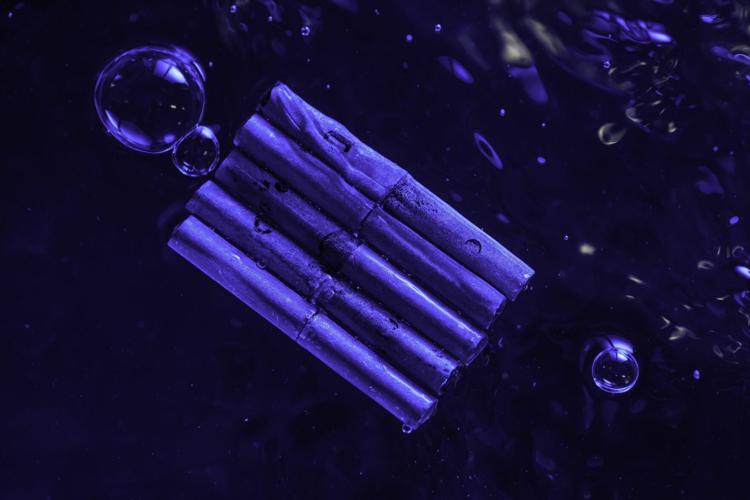

Multiple unsinkable metal tubes linked together in a raft formation could be the basis for the ships, buoys, and floating platforms of the future. (J. Adam Fenster / University of Rochester via SWNS)
By Stephen Beech
Metal tubes said to be "unsinkable" have been engineered by scientists.
They say the "superhydrophobic" design could lead to more resilient ships, floating platforms, and renewable energy innovations.
Over 113 years since the Titanic sank, engineers still have hopes of someday creating “unsinkable” ships.
In a step toward reaching that goal, American researchers have developed a new process that they say turns ordinary metal tubes unsinkable - meaning they will stay afloat no matter how long they are forced into water or how heavily they are damaged.
Professor Chunlei Guo described the process for creating aluminum tubes with "remarkable" floating abilities in the journal Advanced Functional Materials.
By etching the interior of aluminium tubes, the research team at the University of Rochester’s Institute of Optics in New York, created micro- and nano-pits on the surface that turn it superhydrophobic, repelling water and staying dry.

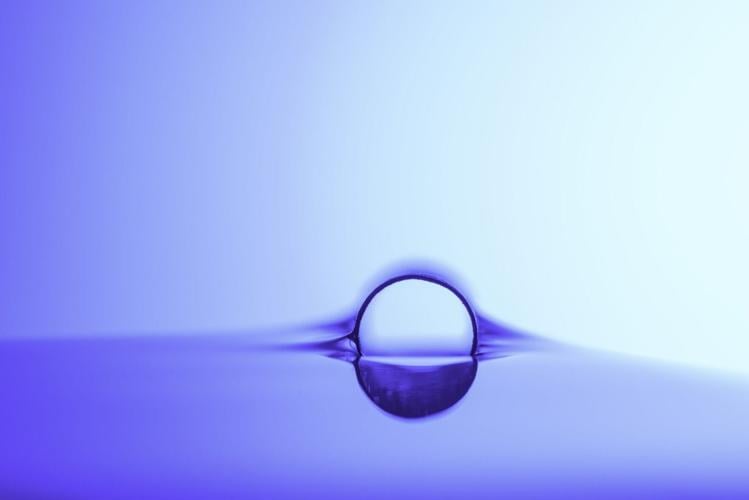
“Unsinkable"" metal tube made from chemically-etched aluminum floats in distilled water at the lab of University of Rochester professor Chunlei Guo. (J. Adam Fenster / University of Rochester via SWNS)
Guo said: "When the treated tube enters water, the superhydrophobic surface traps a stable bubble of air inside the tube, which prevents the tube from getting waterlogged and sinking.
"The mechanism is similar to how diving bell spiders trap an air bubble to stay buoyant underwater or how fire ants form floating rafts with their hydrophobic bodies.


“Importantly, we added a divider to the middle of the tube so that even if you push it vertically into the water, the bubble of air remains trapped inside and the tube retains its floating ability."
Guo and his team first demonstrated superhydrophobic floating devices in 2019, featuring two superhydrophobic disks that were sealed together to create their buoyancy.
But he says the current tube design "simplifies and improves" the technology in several key areas.
The disks that the researchers previously developed could lose their ability to float when turned at extreme angles, but the tubes are resilient against turbulent conditions such as those found at sea.
Guo said: “We tested them in some really rough environments for weeks at a time and found no degradation to their buoyancy."

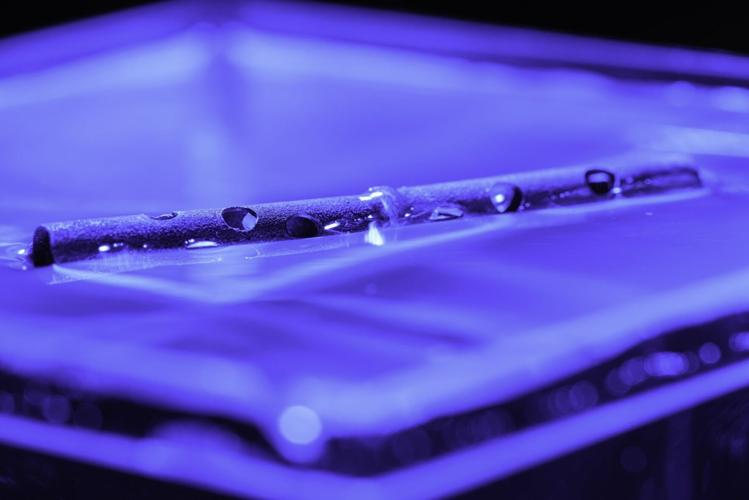
“If you severely damage the tubes with as many holes as you can punch, they still float,” says Guo. (J. Adam Fenster / University of Rochester via SWNS)
He added: “You can poke big holes in them, and we showed that even if you severely damage the tubes with as many holes as you can punch, they still float.”
Guo says multiple tubes can be linked together to create rafts that could be the basis for ships, buoys, and floating platforms.
In lab experiments, the team tested the design using tubes of different lengths, up to almost half a metre (19.6 inches).
Guo says the technology could be easily scaled to the larger sizes needed for load-bearing floating devices.
His team also demonstrated how rafts made from superhydrophobic tubes could be used to harvest water waves to generate electricity.


(0) comments
Welcome to the discussion.
Log In
Keep it Clean. Please avoid obscene, vulgar, lewd, racist or sexually-oriented language.
PLEASE TURN OFF YOUR CAPS LOCK.
Don't Threaten. Threats of harming another person will not be tolerated.
Be Truthful. Don't knowingly lie about anyone or anything.
Be Nice. No racism, sexism or any sort of -ism that is degrading to another person.
Be Proactive. Use the 'Report' link on each comment to let us know of abusive posts.
Share with Us. We'd love to hear eyewitness accounts, the history behind an article.