


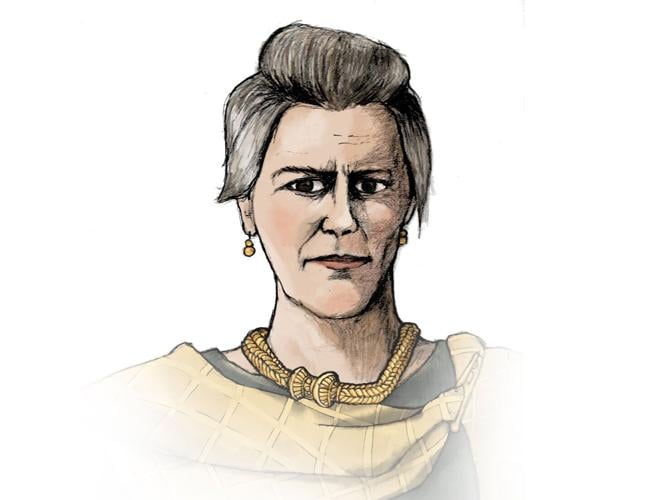
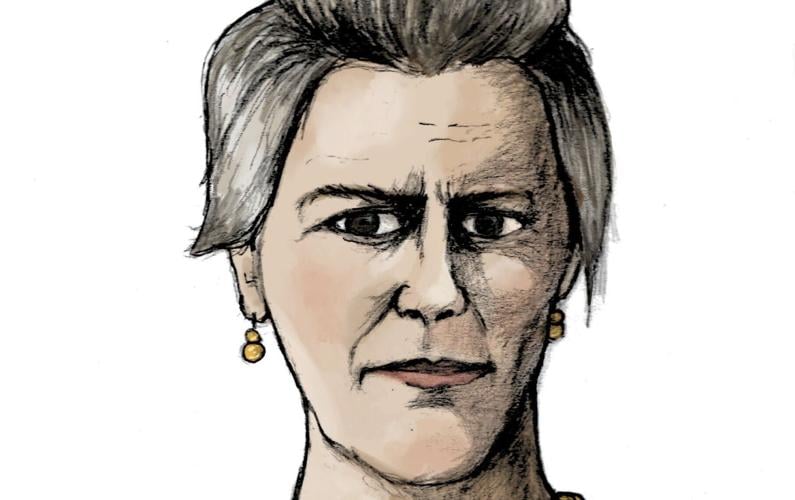
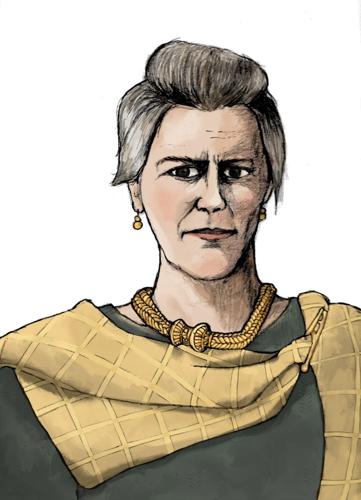

The artistic impression shows Verica as Rex (an Iron Age queen or, from the Roman perspective, a 'female King') around AD 40 wearing Iron Age clothes (tunic and shawl), a gold brooch and gold necklace torc (made in the Roman Empire and similar to those found in the Winchester hoard), Roman gold earrings and with a Julio Claudian hair style (of a type modelled by first century AD Roman empress Livia, wife of Augustus). (Miles Russell and Macsen Russell via SWNS)
By Stephen Beech
An Iron Age British king was actually female, reveals new research.
The study shows that Verica, who was central to the Roman invasion of Britain in A.D. 43, was in fact a woman.
The discovery rewrites the history of early Roman Britain, according to Bournemouth University archaeological researchers.
Verica was ruler of the Atrebates, a tribe whose territory covered much of present-day Hampshire and West Sussex.
But around A.D. 40 Verica was ousted from power, and fled Britain to the Roman Emperor Claudius in Rome.
Claudius was treated harshly by Roman writers, who portrayed him as weak-minded and ineffective, his policy decisions being dictated by women and freed slaves.

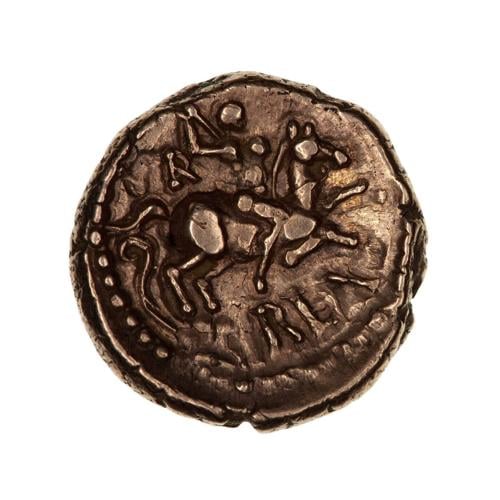
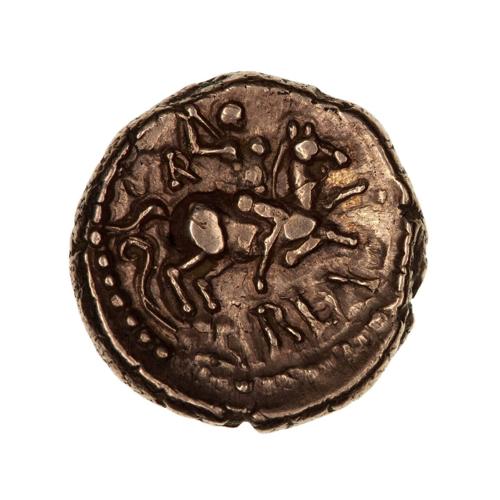
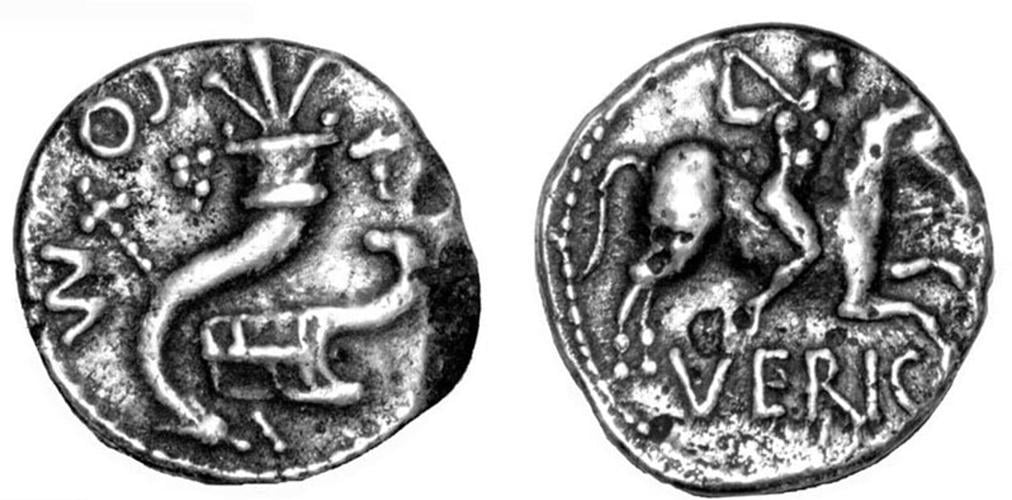
Gold coin of Verica with a naked horse-riding female warrior with a spear and VIR (for Verica) and REX. (Chris Rudd Ltd via SWNS)
According to Roman historian Cassius Dio, the invasion of Britian only happened because Verica persuaded Claudius to cross the Channel.
Study leader Miles Russell said: “Verica is assumed to have been male because of the patriarchal mindset of 19th century, classical historians.
“Verica was not only critical to the special relationship between Britain and Rome in the early first century A.D. but was indisputably female.”
He said one obvious clue is that the name “Verica” ends with the letter “a” which was common for female names at the time, such as and Boudica of the Iceni and Cartimandua of the Brigantes.
Russell says all three were from the same time period and, although Boudica is the most famous, leading a revolt against the Roman invaders in A.D. 60, he argues that Verica was in fact a more powerful and influential ruler of the period.
Russell, director of archaeological fieldwork at Bournemouth University, said: “People also assume she was a ‘he’ because of the term ‘rex’ on coins, but rex is a nongender specific title, both male and female kings were recognized by Rome, Cleopatra of Egypt being the most famous.


The artistic impression shows Verica as Rex. (Miles Russell and Macsen Russell via SWNS)
“The use of the Latin title rex on coins shows that Verica ruled with the full authorization of the emperor.”
He explained that the theory is strengthened by the imagery used by Verica on her coins.
Russell said: “While other coin producing British Iron Age leaders portray obviously male warriors, Verica is depicted as a slender, feminine, bare-breasted figure riding on horseback.”
He added: “The story of Claudius committing to something only because a woman told him to fits the trope of this emperor as being submissive and henpecked.
“In effect, Dio was saying that the campaign was undertaken solely because of the whisperings of a barbarian femme fatale.
“Verica’s role was rather more central to the British expedition.

Silver coin of Verica showing a naked, horse-riding female warrior with a spear. (Chris Rudd Ltd via SWNS)
“Having her onboard ensured the project was a success as she provided tactical information and support on the ground.
“The invasion was Claudius’ great triumph — it being the only chance he had to prove he was a successful military leader.
“Verica provided the excuse for regime change and the emperor seized it.”
Russell says Verica was a major political player in late Iron Age Britain, albeit one whose story has been largely overlooked.
He added: “We should take the archaeological evidence at face value, and remember Verica as a female-king and one of the earliest and most important of British female leaders.
“Had she not been deposed, fleeing to Claudius for military support, Rome may never have invaded Britain in the first place.”
The research, presented in a new book “Caratacus: Great King of Britain” due to be published by Bloomsbury in January, adds to previous Bournemouth University research into the role of women in Iron Age Britain.


(0) comments
Welcome to the discussion.
Log In
Keep it Clean. Please avoid obscene, vulgar, lewd, racist or sexually-oriented language.
PLEASE TURN OFF YOUR CAPS LOCK.
Don't Threaten. Threats of harming another person will not be tolerated.
Be Truthful. Don't knowingly lie about anyone or anything.
Be Nice. No racism, sexism or any sort of -ism that is degrading to another person.
Be Proactive. Use the 'Report' link on each comment to let us know of abusive posts.
Share with Us. We'd love to hear eyewitness accounts, the history behind an article.