


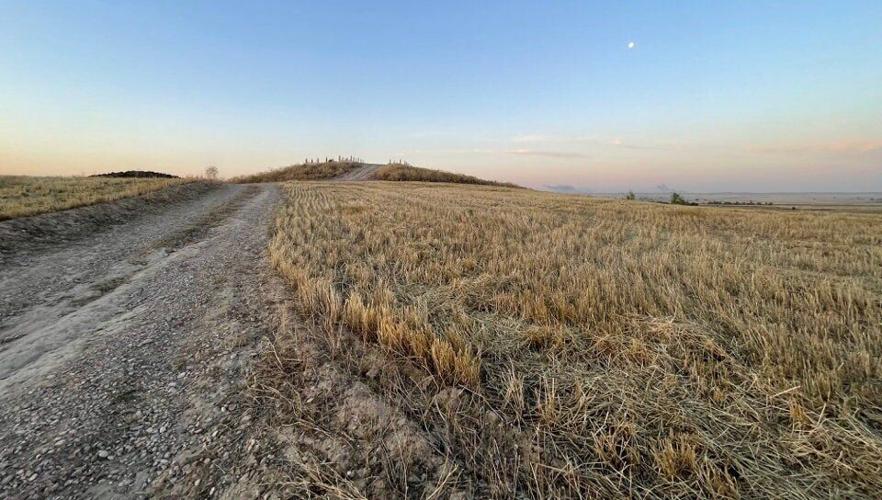
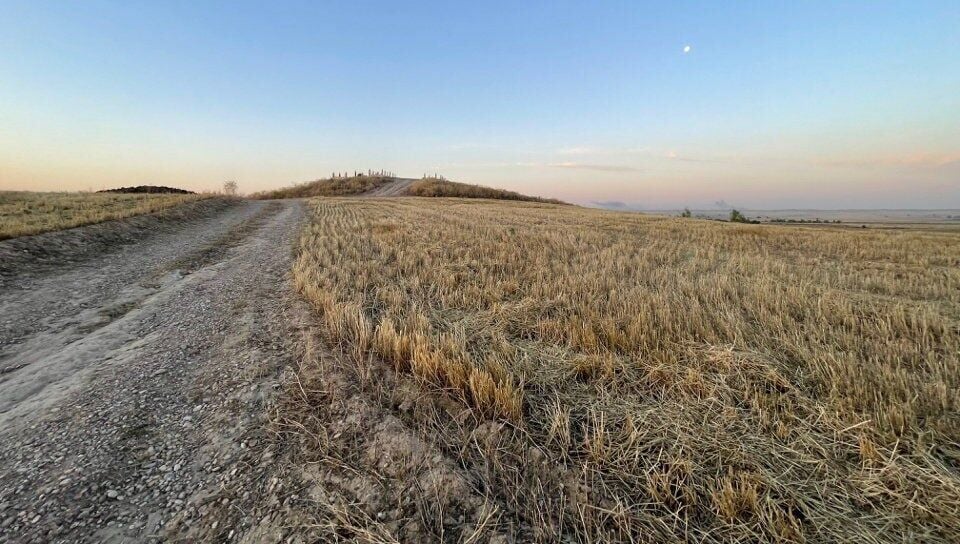
The landscape surrounding the ancient site of Kurd Qaburstan, where UCF-led excavations uncovered evidence of siege warfare, administrative archives and urban life dating back thousands of years. (Kurd Qaburstan Project via SWNS)
By Stephen Beech
Evidence of siege warfare dating back 4,000 years has been discovered in an area known as the "cradle of civilization."
Archaeologists uncovered collapsed structures, human remains, burned layers and concentrated debris that they say suggests a "coordinated and possibly prolonged assault" in ancient Mesopotamia.
The discoveries were made during two summer excavations in 2024 and 2025 in the Kurdistan region of Iraq, near the city of Erbil.
The project, led by archaeologists from the University of Central Florida (UCF), is reshaping what researchers know about how ancient cities lived, governed and fell.
The team uncovered at the ancient site of Kurd Qaburstan the first substantial group of cuneiform administrative tablets found in the Erbil region, along with evidence of large-scale destruction, mass graves and citywide fortifications.
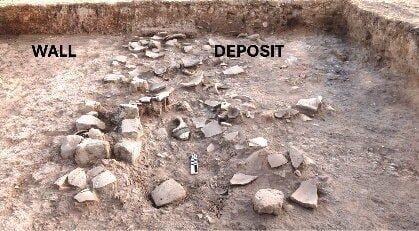
Broken vessels and other debris from a destruction layer were preserved east of a monumental mudbrick wall in the Lower Town East Palace at Kurd Qaburstan. (Edward Dandrow / Kurd Qaburstan Project via SWNS)
They say the discoveries are providing one of the clearest archaeological records yet uncovered of siege warfare and urban life during the Middle Bronze Age.
Tiffany Earley-Spadoni said: "Our 2025 research produced clear archaeological evidence linking the site to the siege of Qabra, beginning with the first significant group of cuneiform tablets found on the Erbil Plain.
"Several tablets are dated within days of each other, matching the timeline of the city's fall."
The team recovered 20 cuneiform tablets and more than 100 administrative sealings from destruction layers within the Lower Town East Palace.
The texts include palace administrative records and a letter that may reference a high-ranking official connected to Qabra.
Some inscriptions may also correspond to the destruction described on the Victory Stele of Dadusha, a 4,000-year-old Old Babylonian stone monument that commemorates the military triumphs of Dadusha, the ancient king of Eshnunna.
Earley-Spadoni, of UCF, who is also director of the Kurd Qaburstan project, said: "Most of the tablets are administrative and provide a snapshot of palace life and the economy of the ancient city.
"One tablet appears to have been written by a high-ranking official in ancient Qabra."

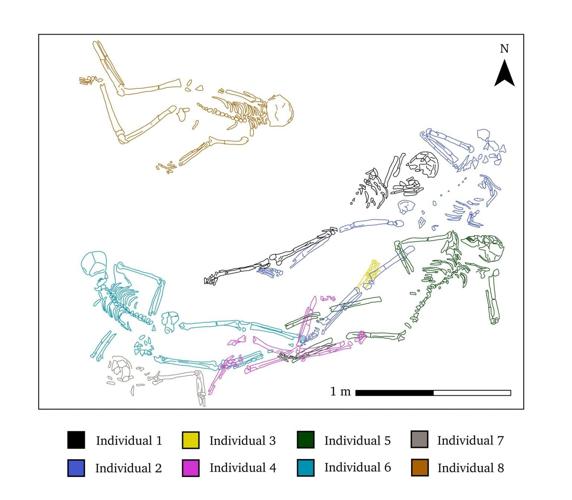
The spatial arrangement of human remains recovered from a destruction deposit in the Lower Town East Palace at Kurd Qaburstan. (Andrea Zurek-Ost / Kurd Qaburstan Project via SWNS)
She says collapsed structures, burned layers and concentrated debris found at the site suggest a coordinated and possibly prolonged assault.


Earley-Spadoni said: "The charred debris, the large number of ceramic vessels and individuals who met untimely deaths and were buried in the destruction layers, provide the clearest archaeological case of Middle Bronze Age siege warfare yet discovered in northern Mesopotamia."
Within the palace destruction layers, researchers discovered the remains of 17 people, studied by bioarchaeologist Andrea Zurek-Ost at Michigan State University.
Earley-Spadoni said: "The individuals were not formally buried and had no associated grave goods.
"Some appear to have been left where they died, including possible palace workers.
"One individual was found face down over a stone basin."
The team also uncovered a preserved street with an engineered drainage system and domestic spaces used for food processing and textile production, pointing to sophisticated infrastructure and economic activity.
They also completed a magnetometer survey covering around 180 acres.
The survey, which measures changes in Earth's magnetic field to detect buried structures, revealed a monumental wall with bastions encircling the site.
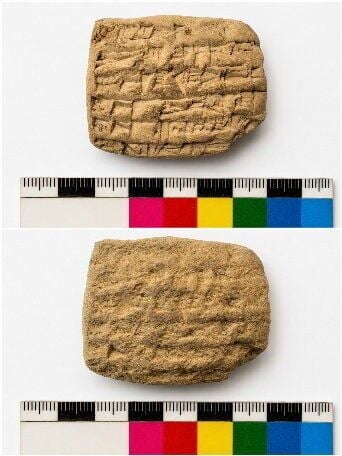
A cuneiform tablet from the Lower Town East palace is shown before and after expert conservation. The tablet is part of a group of administrative texts discovered during excavations at Kurd Qaburstan. (Carmen Gütschow / Kurd Qaburstan Project via SWNS)
The fortifications correspond with those depicted on the Victory Stele of Dadusha and support the identification of Kurd Qaburstan as the ancient city of Qabra.
Earley-Spadoni says Mesopotamia is often associated with southern cities such as Uruk, long viewed as the center of early urban civilization.
But discoveries at Kurd Qaburstan are helping highlight the value of northern cities.
Earley-Spadoni said: "The evidence from Kurd Qaburstan shows that northern cities could be large, complex, and politically significant, with administrative systems, fortifications, and infrastructure comparable to those of the best-known southern sites."
The latest discoveries build on a decade of previous excavation at Kurd Qaburstan by researchers from Johns Hopkins University, revealing a city long absent from the historical record.
Earley-Spadoni says each discovery brings researchers closer to understanding how the ancient city functioned and how it ultimately fell.
She added: "Laboratory investigations are underway, including isotopic and ancient DNA analyses of the 17 individuals.
"This work will help researchers understand their origins and relationships."


(0) comments
Welcome to the discussion.
Log In
Keep it Clean. Please avoid obscene, vulgar, lewd, racist or sexually-oriented language.
PLEASE TURN OFF YOUR CAPS LOCK.
Don't Threaten. Threats of harming another person will not be tolerated.
Be Truthful. Don't knowingly lie about anyone or anything.
Be Nice. No racism, sexism or any sort of -ism that is degrading to another person.
Be Proactive. Use the 'Report' link on each comment to let us know of abusive posts.
Share with Us. We'd love to hear eyewitness accounts, the history behind an article.