


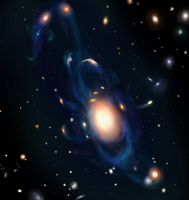
Researchers said this event, called GRB 230906A, is likely in a stream of gas located about 4.7 billion light-years from Earth.

Turbulent plasma near distant stars could blur ultra-narrow signals before they leave their home star systems - making them difficult to detect.

The answer has to do with the air we breathe and that bright white snowpack, as an atmospheric scientist in Colorado explains.

The Conversation reports on winter jackets, blending old physics and modern materials to efficiently trap heat, ensuring warmth and breathability.

The oddly named black hole is firing out energy beams up to 100 trillion times more powerful than the fictional massive space station and super weapon.
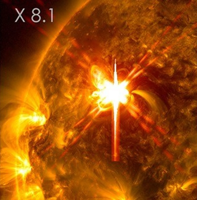
The outbursts were captured by NASA’s Solar Dynamics Observatory spacecraft.

Scientists say the storm, driven by heightened solar activity, could cause temporary effects on technology and communications on Earth.

Officials said geomagnetic activity is likely to increase with the arrival of an Earth-directed coronal mass ejection.

Ocean Optics reports on how spectroscopy revolutionizes research by utilizing light to analyze materials, improving accuracy and efficiency.

Scientists say the best explanation for the longest gamma ray burst is that a black hole consumed a star, but they disagree on exactly how it happened.