


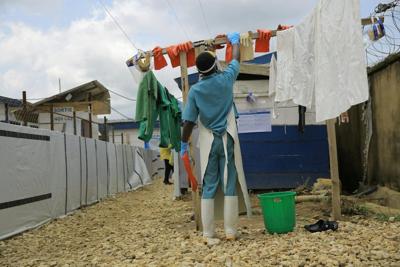
The World Health Organization declared the Bundibugyo Ebola outbreak on May 15, 2026. As of Nov. 18, there have been 11,712 cases and 5,720 deaths, nearly all in the Democratic Republic of Congo, or DRC.
Since the outbreak was declared, medical researchers have been racing to develop a vaccine that will work against this strain of Ebola, and trials are underway.
But in the absence of medical countermeasures, such as vaccines or therapeutic drugs, early detection and supportive care have been essential to reducing both the number of cases and the number of fatalities during this outbreak.
This care has required high levels of coordination and support among physicians, nurses, janitorial and environmental sanitation staff, public health practitioners, volunteers and community health workers, among others. These health workers have been asked to care for their communities at great personal cost. As of August 2026, 160 health workers had contracted Ebola, and 43 had died.
These deaths raise one of the oldest questions in bioethics: What do health workers owe patients during an outbreak?
We are an epidemiologist and a bioethicist, and we’ve been considering this question, alongside the question of how to keep workers safe during the current Ebola outbreak. We believe that worker protection is not an ethical add-on to outbreak control; it is a prerequisite for it.
A history of ethical codes and obligations
In 1847, the American Medical Association’s first code of ethics instructed physicians to keep working during outbreaks, “even at the risk of their own lives.” This rule was reiterated and strengthened in later versions of the code.
Up to that time, there had been a history of some physicians choosing to leave rather than support a widespread outbreak, ranging from the Antonine plague outbreak of 165-180 to the 1793 yellow fever epidemic in Philadelphia.
Ethical codes and guidelines give healthcare workers a shared set of principles that they can lean on, particularly when they have to make decisions in high-stress situations, to protect the community and to keep themselves safe.
Since the 1847 code, the debate over health workers’ duty to treat in the face of a contagious disease outbreak has turned on how much risk they can be asked to bear. Through outbreaks of HIV, SARS and COVID-19, that debate has resurfaced, with questions grounded in whether health workers have a moral obligation to act in the best interest of others; if they gave implied consent when they entered their professions; if the specialized training they have makes them uniquely qualified to provide care; and if the social contract they entered with the public, in exchange for reciprocal benefits such as priority access to vaccines, justifies their labor.
During the COVID-19 pandemic, some ethicists argued that the duty to care is real but conditional, depending on the availability of adequate protective equipment and on the state’s ability to respond to a pandemic and safeguard health workers.
Violence against health workers
But these conditions typically make two assumptions: first, that the main danger to a health worker is an infection, and second, that the health worker is a licensed clinician.
Recent research on violence against health workers has focused on physicians, trainees and nurses in emergency departments or psychiatric units, and more recent research highlights similar experiences throughout and following the COVID-19 pandemic.
But when an outbreak begins in places affected by prolonged, violent conflict, such as the eastern DRC, the primary danger to health workers is not necessarily the disease itself. Those responding to the Bundibugyo outbreak have also faced the anger of patients and affected communities, including physical and sexual assault and psychological violence, threats or intimidation. And that’s in addition to the downstream effects of protracted insecurity and armed and systemic violence, such as the criminalization of providing healthcare, abduction, arson, armed attacks and violent searches and theft.
The World Health Organization’s surveillance system for attacks on health care recorded 81 attacks since the declaration of the Bundibugyo outbreak in May 2026 through Nov. 18, 2026, resulting in five deaths and 34 injuries. These numbers include 29 attacks on facilities and warehouses, which have exacerbated already precarious resource shortfalls.
This data reflects only those attacks that have been reported to and verified by the surveillance system, so it does not necessarily give a complete picture of violent events. The reality as reported on the ground is even bleaker. As of August 2026, U.N. Senior Ebola Coordinator Julien Harneis reported that there had been over 260 attacks on health workers, and eight health workers had been killed.


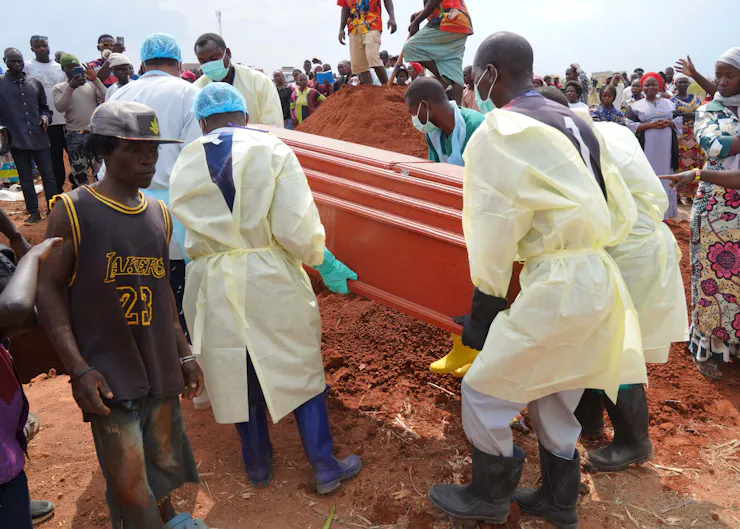
Some clinics and health workers have been caught up in the political violence in the DRC, a complex conflict with roots in the lingering effects of Belgian colonization and the extractive industries that have exploited the area’s resources and left poverty and political instability in their wake. But some have been targeted due to community fear and mistrust. Many locals do not believe the care centers are safe, and they are upset that they cannot bury friends and family members who die from Ebola using normal burial rites and procedures, which may involve practices such as washing the body, which could spread the virus.
Unofficial health workers
But what about the front-line health workers who aren’t licensed clinicians?
Most of the existing guidance in healthcare, such as the Hastings Center’s COVID-19 framework and the WHO’s guidance on ethical issues in outbreaks, is aimed at licensed clinicians working in clinical settings.
However, these organizations don’t provide ethical guidance to the community health workers, volunteers and cleaning staff who are often the most exposed in an outbreak. Many are paid through incentives rather than salaries, and they may travel alone to complete their work. Many are also women who face gendered harassment and assault on top of the risks their male colleagues share.
Though these workers occupy less formalized or protected positions within the health system, they are central to its efforts. But right now, the ethical frameworks that protect health workers – and the legal and societal obligations that follow from them – do not extend to these workers.
Finding a balance
We believe there needs to be a balance: The safety of front-line workers cannot be sacrificed or overlooked in complex emergencies, and the urgent need to contain outbreaks cannot be valued more than the ethical duty to protect the health workers carrying out that response.
If health workers’ duty to treat depends on the state’s duty to protect, then protection from violence is the most basic protection to which a health worker is entitled.
In 1847, physicians were told to keep working, even when their own lives were at risk from the pathogen. But the risks confronting health workers in the Bundibugyo crisis today extend beyond infectious threats. Some are being asked to continue working even when they face the possibility of violence from armed actors, the community and the broader insecurities of protracted conflict.
When health workers – clinicians or not – are in unsafe conditions, disease surveillance and contact tracing stall, treatment capacity shrinks, communities lose access to trusted sources of care, and health workers face potentially higher risk of infection. In a conflict-affected crisis like the current Bundibugyo outbreak in the eastern DRC, protecting the workforce is part of containment.
This article is republished from The Conversation, a nonprofit, independent news organization bringing you facts and trustworthy analysis to help you make sense of our complex world. It was written by: Baldeep K. Dhaliwal, Johns Hopkins University and Sarah Elizabeth Scales, University of Nebraska Medical Center
Read more:
- When it comes to Ebola, how much risk is too much?
- Delayed international support has hampered efforts to contain and treat Ebola in the Democratic Republic of Congo
- Essential US workers often lack sick leave and health care – benefits taken for granted in most other countries
The authors do not work for, consult, own shares in or receive funding from any company or organization that would benefit from this article, and have disclosed no relevant affiliations beyond their academic appointment.


(0) comments
Welcome to the discussion.
Log In
Keep it Clean. Please avoid obscene, vulgar, lewd, racist or sexually-oriented language.
PLEASE TURN OFF YOUR CAPS LOCK.
Don't Threaten. Threats of harming another person will not be tolerated.
Be Truthful. Don't knowingly lie about anyone or anything.
Be Nice. No racism, sexism or any sort of -ism that is degrading to another person.
Be Proactive. Use the 'Report' link on each comment to let us know of abusive posts.
Share with Us. We'd love to hear eyewitness accounts, the history behind an article.