


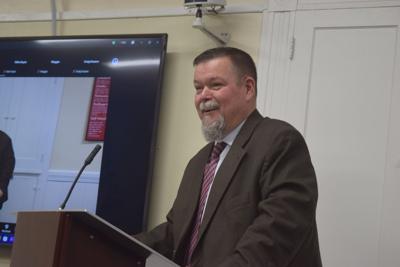
LACONIA — Superintendent of Schools Joseph Baeta says last week’s vote to cap annual property tax increases won’t substantially impact funding decisions for public schools, but stressed the importance of funding from state legislators.
Baeta said the school funding system relies heavily on local property taxes, with state and federal assistance helping to offset some of the costs. For Laconia, that means local taxpayers provide much of the money needed to support teachers, school operations, educational programs and other district expenses.
Budget changes
The school district has seen increasing expenses — dominated by salaries and benefits — in recent years, according to public budget information.
During 2023-24, the district’s spending plan totaled $40.7 million, of which about $27 million was for salaries and benefits.
In 2024-25, the budget increased to $46.03 million, with almost $31 million going to salaries and benefits.
The following year, 2025-26, expenses dropped to $44.28 million, of which $32.7 million was for salaries and benefits.
Most recently, for the 2026-27 budget, the district has proposed a slight spending increase to $46 million, which is closer to two years ago, with salaries and benefits totaling $34 million.
Tax cap
During last week’s General Election, voters in Laconia, and in some communities across the state, passed a property tax cap measure limiting annual increases to local school taxes.
But Baeta said the moratorium on annual increases is comparable to what is already happening in Laconia. Instead of collecting taxes directly from property owners, the Laconia School District budget is funded by taxes based on per-pupil adequacy aid as a portion of city taxes.
The challenge, of course, is each year’s budget cycle is contingent on what the city determines is adequate.
Baeta said the recent decision by voters makes other funding options even more impactful, noting even a modest increase in state contributions could help ease the burden on local taxpayers.
“Education tax rates have risen substantially in communities across New Hampshire in recent years, placing additional pressure on homeowners,” Beata said. “Property tax bills generally break down the various components of the education levy, including county taxes, municipal taxes and the statewide education property tax. The local share makes up the remaining amount needed to support the school budget after other revenue sources are accounted for."
He said communities face different financial challenges depending on their size and student populations. Smaller towns with relatively few students can face significant per-pupil costs, while larger communities, such as Laconia, have a broader enrollment and tax base.
Growth in the city's taxable property base could eventually help spread education costs among more property owners, potentially easing the burden on existing taxpayers. Baeta acknowledged such growth takes time, and is not an immediate solution to rising education costs.
Beata said the voter-approved tax cap makes school support at the Statehouse even more vital, although early indications are state leaders stand behind the issue.
Gov. Kelly Ayotte (R-NH), who retained her seat in last week’s election, was in favor of the measure. Time will tell if lawmakers choose to support education spending going forward.


(0) comments
Welcome to the discussion.
Log In
Keep it Clean. Please avoid obscene, vulgar, lewd, racist or sexually-oriented language.
PLEASE TURN OFF YOUR CAPS LOCK.
Don't Threaten. Threats of harming another person will not be tolerated.
Be Truthful. Don't knowingly lie about anyone or anything.
Be Nice. No racism, sexism or any sort of -ism that is degrading to another person.
Be Proactive. Use the 'Report' link on each comment to let us know of abusive posts.
Share with Us. We'd love to hear eyewitness accounts, the history behind an article.