


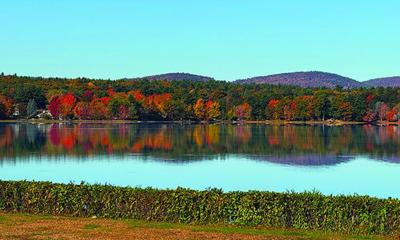
Lakes Region tourism leaders are looking toward the winter season to help offset a softer-than-expected fall, as rising travel costs and a decline in Canadian visitors appear to have put a damper on 2026 activity so far.
Although summer and fall tourism figures are not yet available, preliminary observations suggest visitor numbers were not as strong as a year earlier.
Data from the New Hampshire Division of Travel and Tourism Development indicate the region experienced modest growth in overnight visits and visitor spending during the winter and spring, but the gains may not have been enough ahead of a less robust fall.
According to state data, approximately 660,000 overnight visitors came to the Lakes Region during spring 2026, spending a total of $180.7 million. That compares with $166.4 million in spending during spring 2025.
The slight increase in spending came despite a significant decline in Canadian travel to the region, according to border-crossing data from the U.S. Department of Transportation.
The data show the number of personal vehicles entering the U.S. from Canada and traveling into Northern New England declined by a little more than 500,000 year over year.
Canadian border crossings into the region have fallen from approximately 7.9 million in 2024, to 5.2 million in 2026.
The decline represents a potentially significant loss for tourism-dependent businesses, which traditionally rely on Canadian visitors during both the summer and winter seasons.
Grace McNamara, executive director of the Lakes Region Chamber of Commerce, said the chamber has limited access to current tourism statistics, as many hospitality businesses are too busy during summer months to provide regular updates.
Based on information she received earlier in the season, visitor numbers appeared relatively steady, while spending may have softened.
McNamara said visitors contacting the chamber during the summer were increasingly looking for affordable ways to enjoy the region.
Callers frequently asked about bargains and lower-cost accommodations and activities, expressing concern about the price of gasoline and groceries.
Higher travel costs may be influencing decisions about where and how people vacation, particularly for families traveling from outside New Hampshire.
Despite those concerns, McNamara said the region continues to draw visitors for its traditional attractions, including fall foliage, lakes, mountains, hiking and camping.
Some visitors have longstanding connections to the Lakes Region, including childhood summers spent at family camps, or attending summer camp.
The region's entertainment offerings, including concerts and other performing arts, help broaden its appeal, McNamara said.
“The Lakes Region also offers world class entertainment, concerts, you know, large venues, small venues,” McNamara said. “So, there are just a lot of things for people to do and to see here.”
The chamber promotes seasonal travel through its website, comecatchtheglow.com, which uses advertising campaigns aimed at audiences throughout the Northeast, and has switched its focus on the approaching winter season.
Winter tourism could provide an important boost to local businesses.
State tourism figures show the most recent winter season brought approximately 543,700 overnight visitors to the Lakes Region, who spent an estimated $145.7 million.
That compares with 517,400 overnight visitors and $134.4 million in spending during the previous winter.
The increase came during a winter marked by cold temperatures and substantial snowfall — conditions which traditionally benefit ski areas and outdoor recreation businesses.
At Gunstock Mountain Resort in Gilford, winter brings the lifeblood of the tourism industry: snow. And last year was a banner year for snowfall, according to Gunstock General Manager Robert Drake.
Thankfully, the resort isn't forced to rely on Mother Nature to bring in snow. The area has the capability to cover 98% of its skiable terrain with snowmaking machines.
"Man-made snow is what keeps us going," Drake said. "We generally try to put down 4 feet of man-made snow across the mountain."
Resort staff, along with others in the area, then sit back and wait for natural snow, something forecasters say is coming.
The National Oceanic and Atmospheric Administration's Climate Prediction Center is calling for a slightly milder snow season this year.
The center's forecasters stated on Nov. 19 that it "favors a milder-than-normal winter across the whole Northeast," although storms will bring wetter than normal snow in the Lakes Region.


(0) comments
Welcome to the discussion.
Log In
Keep it Clean. Please avoid obscene, vulgar, lewd, racist or sexually-oriented language.
PLEASE TURN OFF YOUR CAPS LOCK.
Don't Threaten. Threats of harming another person will not be tolerated.
Be Truthful. Don't knowingly lie about anyone or anything.
Be Nice. No racism, sexism or any sort of -ism that is degrading to another person.
Be Proactive. Use the 'Report' link on each comment to let us know of abusive posts.
Share with Us. We'd love to hear eyewitness accounts, the history behind an article.