


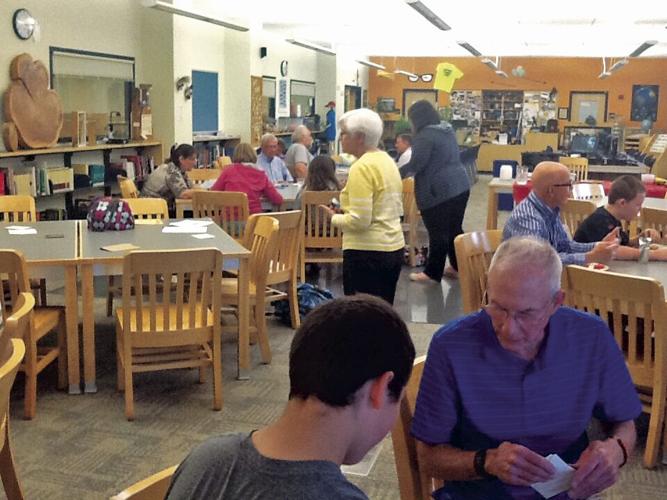
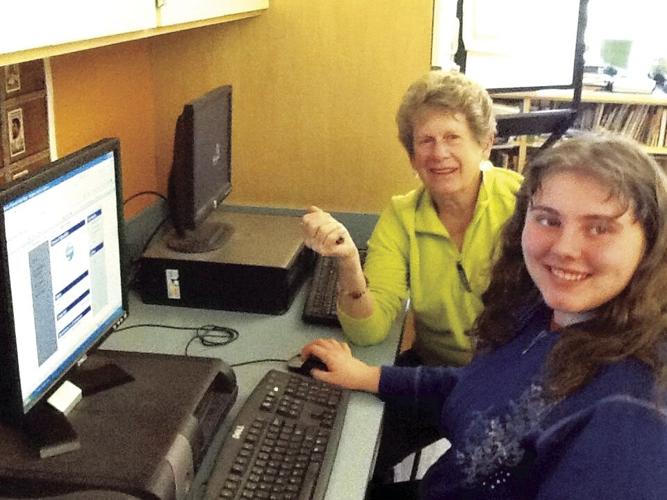
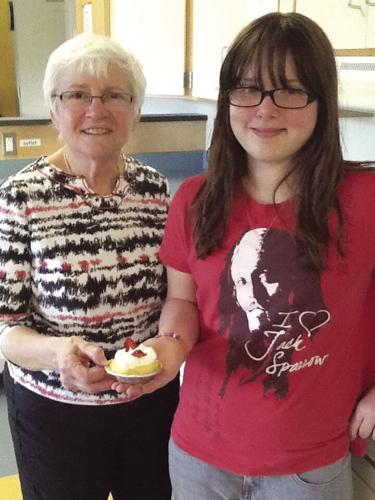
LACONIA — Laconia Middle School is aiming to revive a mentoring program this spring that's been dormant since the start of the pandemic.
Mentoring Together, where students meet once a week with local volunteer mentors, was kickstarted in 2010. The program had as many as 30 mentor-mentee pairings when the pandemic put it on indefinite hiatus.
Laconia Middle School counselor Abagail Rivet presented her restoration plan for the program to the Laconia School Board at its Dec. 6 meeting.
Just the presence of a mentor figure, Rivet told school board members, can help students in deep ways.
“Sometimes that’s all our young kids are looking for,” Rivet said, “that connection with somebody.”
The program prioritizes relationships and relationship building, Rivet emphasized, for both students and volunteers. The goal is to provide students with a reliable adult in their routine who they can connect with, tell about their day, ask questions and admire. Ideally, sixth graders could keep the same mentor for all three years of middle school, lending additional continuity and stability.
In addition to requiring the district’s full screening and application process, the program will ask volunteers about why they feel called to mentorship and what their interests and passions are. Students will be paired to a mentor with a common interest.
“I got into it because one of my neighbors volunteered me,” said Alfred Columb, who participated in the program as a mentor for six years before 2020. Despite being unsure if he was qualified at first, Columb described the experience as overwhelmingly positive and akin to a grandparent-grandchild dynamic.
All mentor-mentee pairings will meet together after school for an hour each week over games, crafts, snacks and the like, allowing for both one-on-one time and group activities. Volunteers must be able to commit to at least an hour weekly.
“Consistency is really important. A lot of kids in our school districts don't really have people they can rely on, so we want to make sure that there are consistent weekly meetings,” Rivet said.
Students living in at-risk situations who have access to adult mentors are less likely than their peers to skip school or begin using drugs or alcohol and more likely to participate in sports and clubs and to do volunteer work.
Mentorship is linked to higher academic performance and aspirations, greater self confidence and better relationships with adults in general, according to Rivet.
“Because they’ve had a positive experience with another adult,” Rivet said, [students’ "attitudes toward parents and guardians improve, their attitudes toward teachers improve.”
Mentors can also expand students’ goal-building horizons by sharing why they chose their career and what led them down their chosen path.
“They learn that they can make connections with community members, which they hopefully will carry into high school,” Rivet continued.
Likewise, volunteers can gain from the time they spend with students.
Mentors can find a sense of accomplishment and purpose and can better their supervisory and interaction skills with kids.
“I remember once, I was downtown at the Fourth of July parade and a guy came running up to me and gave me this big hug,” Columb recalled. "He said to me, ‘You don’t recognize me, do you?’ and then, after he said his name, I remembered.” It was a former mentee, one who had moved away.
“What a change in him after only a few years,” Columb said. “It was really great to see him grown into a young man.”
The needs of young people for mentorship have been underlined by the seclusions and sacrifices endured during the coronavirus pandemic. Not only have periods of at-home learning and social distancing left children feeling isolated, but the interruptions to hobbies and extracurriculars slashed opportunities for kids to interact and form bonds with adults outside their daily home and school routines.
Columb said his favorite times shared with mentees were when they were able to attend theater shows or go to restaurants.
“It was great to get them into a new environment and to share experiences with them they’d never had before,” he said. “Most of them didn’t get to do things like that often.”
Adults, and the retired especially, also had their access to new and casual acquaintances pared away by the pandemic. Mentors can get to know each other while forming bonds with young people outside their family and gaining direct insight into the lives of today’s youth.
A major draw for Columb was being able to understand what young people’s lives were actually like.
Based on what he learned as a mentor, he said, “I’d tell people that they didn't realize how nicely we had it in the '60s. We had it good. Today ... I don’t think I’d want to be a parent raising young kids.”
Mentors will be trained by Rivet and her department about confidentiality, how to connect with kids at the middle school developmental stage and about mandatory reporting scenarios, should they arise.
A good mentor, Rivet emphasized, is “somebody that will listen to [students], someone who is kind, someone that will meet them where they're at.”
The latter is key. Today’s middle schoolers, she continued, are dealing with heightened rates of mental health challenges, and social media use has spread further into younger age ranges than even the last time this program was in place.
Patience, then, is both a tool and a takeaway for mentors.
“If you know a kid's having a bad day, that doesn't mean that they don't enjoy their mentoring experience,” Rivet said. “It's just that they're having a bad day.”
Rivet is reaching out to local volunteer organizations looking for interested potential mentors. Her goal is to get 10 for the spring semester of this year and build on that number going forward. Because the program is built around one-on-one mentoring, the number of volunteers is the limiting factor.
To those on the fence, Rivet said, “it doesn't have to be so drastic where you are their mentor for the rest of their life. ... There doesn't have to be this huge success story. Every single mentor relationship, just that hour a week for a year, could be making a major difference.”
“Just jump in,” Columb said. “It’s a great experience.”


(1) comment
How does one find out more about the program and the potential of volunteering ?
Welcome to the discussion.
Log In
Keep it Clean. Please avoid obscene, vulgar, lewd, racist or sexually-oriented language.
PLEASE TURN OFF YOUR CAPS LOCK.
Don't Threaten. Threats of harming another person will not be tolerated.
Be Truthful. Don't knowingly lie about anyone or anything.
Be Nice. No racism, sexism or any sort of -ism that is degrading to another person.
Be Proactive. Use the 'Report' link on each comment to let us know of abusive posts.
Share with Us. We'd love to hear eyewitness accounts, the history behind an article.